

GMRS vs CB vs Ham Radio for Off-Roading
GMRS vs CB radio vs ham: compare range, licensing, power, antenna setup and cost, and see which suits trail groups and solo off-road trips.
Start here for off road gear that supports almost any trail day: storage, communication, and trip-prep basics. This hub links out to focused guides on recovery, upgrades, camping, tires, lighting, maintenance, and trail skills.

As an Amazon Associate, Off Road Freedom earns from qualifying purchases. See our affiliate disclosure.
$19.99$16.99
View on Amazon (AUTOWN Flat Tire Repair Kit with Plugs 31pcs, Professional Tire Plug Kit | Universal Emergency Tools for Car, Motorcycle, ATV, Jeep, Truck, Tractor, SUV Flat Tire Puncture Repair)$198.99
View on Amazon (BUNKER INDUST Recovery Kit, 1"×30ft Kinetic Recovery Rope + 2 Soft Shackles + Recovery Ring+ Shackle Hitch Receiver + Winch Dampener+ Gloves+ Carry Bag, Off Road 4x4 Recovery Gear Winch Accessories)$24.99$17.99
View on Amazon (First Aid Kit 300PCS Car Home Camping Essentials Red 1st Aid | School Supplies,Dorm Room Essentials,Survival Kit,Emergency Kit,Outdoor Adventure,Office Hiking Portable)$102.90$97.76
View on Amazon (X-BULL Off-Road 4×4 Recovery Kit - Heavy Duty 3'' x 30' (31518LBS) 100% Nylon Tow Strap+41887lbs Break Strength D-Ring Shackles (2pcs)+Block Pulley+Gear Storage Bag +Gloves for ATV/UTV Jeep Truck)$29.99$23.99
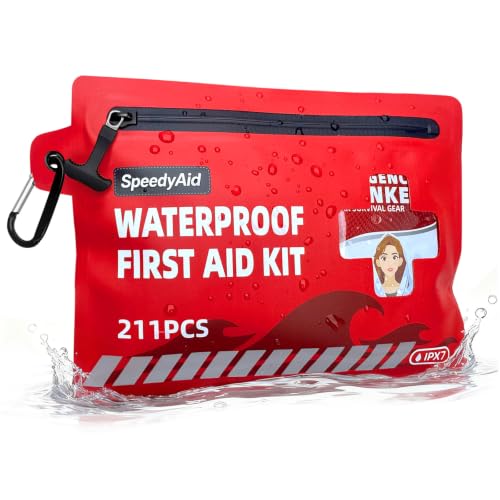
View on Amazon (211 PCS Waterproof First Aid Kit, Emergency Supplies for Hiking & Boating | IPX7 airtight dry bag pouch, durable survival medical supplies, ideal for kayak, camping, hiking and outdoor water sports)$94.90$83.99
View on Amazon (VEVOR Off-Road Recovery Kit, 3" x 30' Tow Straps Heavy Duty with Hooks 30,000 lbs Winch Strap Kit, 44092 lbs D-Ring Shackles, Shackle Receiver, Snatch Block Pulley, Gloves, Storage Bag for ATV Jeep)$34.99$29.99
View on Amazon (OlarHike Tire Inflator Portable Air Compressor,Dual Power-3*2000mAh &12V DC | Lightning-Fast Inflation, Auto Shut-off, Cordless Air Pump for Car Tires, Bikes, Balls with LED & Digital Pressure Gauge)$48.99
View on Amazon (Off-Road Tow Strap Recovery Kit, 3" x 8' Tree Saver Strap | 8.8T Winch Snatch Block, 3/4" D-Ring Shackles 2 Pack, with Storage Bag For Jeep Truck SUV UTV ATV Trailer)$34.00
View on Amazon (Rhino USA Tire Repair Kit (86-Piece) - Heavy Duty Tire Plug Kit | Professional 86-Piece Plug Set for Punctures & Flats. Tubeless Repair for Car, Motorcycle, ATV, UTV, RV & Trailer.)$39.90
View on Amazon (REINDEER Tow Strap 30FT Survival Shovel Heavy Duty Recovery kit Off-Road | Multi‑Functional Survival Shovel;Strap 35000lbs;D-Ring Shackles;Heavy duty Carry Bag with multi-compartment;Truck, SUV, ATV)Prices and availability were accurate when retrieved from Amazon and may change. Retrieved Nov 12, 2026.
Off-road gear lists tend to grow without limit, and a rig full of unused gear handles worse, burns more fuel and costs more to insure against damage. A better way to build a kit is to start with the trip. How far from help will you be? How many vehicles are in the group? How long will you be out, and in what weather? The answers change the list more than any brand choice does.
A day on a well-travelled trail with friends needs air, a repair, a way to get unstuck and a charged phone with a map. A weekend adds camp gear, more water and more food. A remote trip adds redundancy, because a single failure then has no easy fix. Our beginner gear checklist sets out the baseline, and the camping checklist covers the overnight additions.
The table below is a starting point, not a rule. Items marked "Yes" belong in almost every kit for that trip. "Add" means worth carrying once you have the basics. "Plan for it" means the item matters more as you move farther from help. Adjust it for your vehicle, your group and the terrain.
| Item | Day trail run | Weekend trip | Remote or overland | Read more |
|---|---|---|---|---|
| Portable inflator and gauge | Yes | Yes | Yes, plus a backup | Inflator picks and compressor guide |
| Tire plug kit | Yes | Yes | Yes, plus a spare plan | How to plug a tire |
| Traction boards and shovel | Yes | Yes | Yes | Recovery gear list |
| Rated shackles and a recovery strap | Add | Yes | Yes | Recovery gear hub |
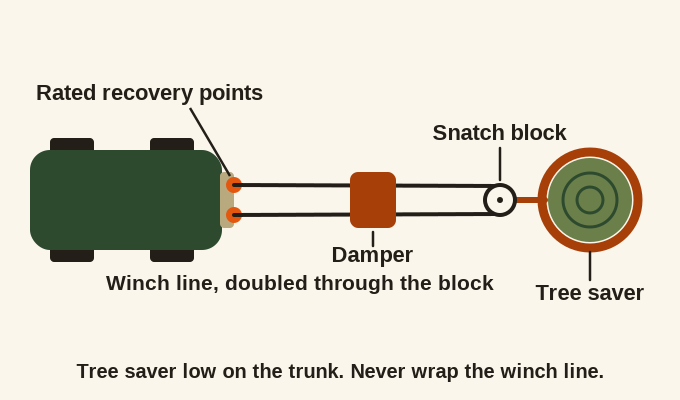
| Winch, damper and snatch block | Add | Add | Plan for it | Snatch block how-to |
| Water | Yes | Yes, more | Plan for it | Water storage guide |
| First-aid kit | Yes | Yes | Yes, with training | Trail first-aid kit |
| Radio for the group | Add | Yes | Yes | Communication options compared |
| Trail tool kit | Yes | Yes | Yes, more | Trail tool kit |
| Camp shelter and sleeping system | No | Yes | Yes | Camping checklist |
| Power station or second battery | No | Add | Plan for it | Power station sizing |
| Full-size spare | Yes | Yes | Yes | Full-size spare guide |
Tires are the part of the vehicle that meets the ground, and punctures are among the most common trail failures. A portable inflator, a pressure gauge and a plug kit cover most of them. Read our inflator picks if you are choosing one, and how to plug a tire gives the step-by-step, including when a plug is the wrong answer. The honest rule is that a string plug from outside is a temporary trail fix and the tire should be inspected by a shop afterwards.
If you are deciding between a compressor you carry and one you mount, onboard vs portable air and how to choose a compressor explain the specs that matter. For the spare, see planning for a full-size spare.
Recovery gear is its own subject, and the recovery gear hub covers it properly. For a general kit, the short version is boards, a shovel, gloves, rated shackles and a stretch strap or kinetic rope, all used from rated recovery points. Our recovery gear list puts them in order.
Tools are the quiet half of a good kit. A trail tool kit does not need to be big, but it needs to fit your vehicle: the right sockets, a way to deal with a loose battery terminal, tape and zip ties, and a torque wrench if you change wheels, because wheel fasteners need re-checking. See planning a trail tool kit and lug nut torque after off-roading. Torque values come from your owner's manual, never from a list on the internet.
Cell coverage disappears long before the trail does. A radio lets the group talk to each other, and our GMRS vs CB vs ham comparison explains the licences and trade-offs; our GMRS picks list four radios by role. GMRS needs an FCC licence, and FRS does not.
Water is heavy, and running short is serious, so water storage for overlanding covers carrying it. First aid is a kit plus training: how to build and store a trail first-aid kit says what to pack from official lists, and a Red Cross or NOLS course teaches what to do with it.
Finally, keep gear where you can reach it and where it will not become a projectile; SUV cargo organization shows how.
Once you stay overnight, power starts to matter. A fridge, a phone and lights add up quickly, and a portable power station is one way to run them. How to size a power station shows the arithmetic, and our power station shortlist lists four by role with the figures the makers print. If a vehicle fridge is on your list, 12V fridge vs cooler weighs the options.
Keep the rest simple. Shade, a warm sleeping system and a camp kitchen that packs flat will make more difference to a trip than another gadget. See sleeping systems compared and a camp kitchen that works.
The most expensive gear mistake is not buying the wrong item, it is trusting an item you have never used. A winch rope still in its box, a plug kit you have never opened and a radio nobody has programmed all fail for the same reason: the first time you handle them is the day you need them. Unpack new gear at home, read the instructions, and use it once in a low-stakes setting.
The second mistake is buying for the trip you imagine instead of the one you take. Rooftop tents, onboard compressors and winches suit certain kinds of travel, and they come with weight, cost and maintenance. If your trips are day runs on maintained trails, a good inflator, a plug kit, boards and a strap will take you further than a full overland build.
When you buy, read what the maker states and ignore adjectives. A rating, a size, a material and a warranty are facts. "Military grade" and "indestructible" are not. Our how we choose page explains how we read product pages.
A kit decays quietly. Batteries discharge, rubber dries out, first-aid supplies expire, water goes stale and hose connections collect dirt. The fix is a short routine after every trip: restock what you used, inspect what you carried and charge what holds a charge. Do it the same week, while you still remember what failed.
Keep a simple list in the vehicle or on your phone with the date each item was last checked. Tires and air come first: check the inflator runs, the hose and chuck are clean and the plug kit still has its parts. Then recovery gear: inspect straps and shackles as described in our recovery gear hub. Then comfort and safety items: water, first aid, headlamps and a charged phone bank.
Take a seasonal look, too. Cold weather stiffens plugs and sealants, heat affects water and batteries, and wet seasons call for dry bags and spare layers. If you store the kit in the vehicle, check it for moisture and for anything that has shifted or rusted. A kit you trust is a kit you have recently held in your hands.
Start small and add on evidence. After each trip, write down the one thing you wished you had and the one thing you did not use. The first goes on the shopping list and the second comes out of the vehicle. After a few trips the list reflects your real use, and it will look different from a generic checklist.
As trips get longer or more remote, add redundancy before comfort. A second way to inflate a tire, a second way to communicate and a spare for the one part that would end the trip matter more than a better stove. Move from day runs to weekends by adding water, food, shelter and a way to power what you carry. Move from weekends to remote travel by adding training, navigation backups and a satellite messenger used as its maker describes.
Keep the vehicle in mind. Every addition adds weight and takes space, and a heavier vehicle is harder on tires, brakes and suspension. If you are adding armor, a rack or drawers, read the vehicle upgrades hub so the build and the kit grow together, and take a look at the vehicle pages for the Bronco, Wrangler, Tacoma and 4Runner if you drive one.
One piece for each of five jobs a general kit has to cover, each with the figures the maker prints. We chose them from maker pages and manuals; we did not test them.
Start with air
A plain corded compressor with a gauge and battery clamps, the kind that lives in a recovery bag.
Viair product page, checked 2026-11-12
Carry a repair
A plug kit with a lot of repair material and a case that stays with the vehicle.
Safety Seal product page, checked 2026-11-12
Talk on the trail
An entry-level handheld pair for walking the line or spotting.
Midland product page, checked 2026-11-12
A rated connection
A rated connection with the ratings printed on the maker's page.
Factor 55 product page, checked 2026-11-12
Power at camp
A mid-size LiFePO4 station with two fast USB-C ports and a 12V outlet for a fridge.
EcoFlow product page, checked 2026-11-12
Amazon buttons are affiliate links: we may earn from qualifying purchases. We chose these from maker pages; we have not tested them. See how we choose.
Check tire sizes and pressure before the trip, not on the trail.
Every guide in this category, from checklists to how-tos and picks pages.
GMRS vs CB radio vs ham: compare range, licensing, power, antenna setup and cost, and see which suits trail groups and solo off-road trips.
Off road essentials for beginners: recovery, tire, tool, safety, navigation and comfort basics to bring before your first trail day.
An SUV cargo organizer keeps recovery gear, tools and camp supplies secured and reachable on rough trails. Layout ideas and what to strap down first.
A car first aid kit for the trail needs more than bandages. Learn what to pack, how to store it so it stays dry, and when to check and restock it.
Build a trail tool kit for your rig: the sockets, wrenches, spares and fasteners worth carrying, and how to store tools so they stay ready.
Water storage for overlanding: estimate how much to carry per person per day, compare tank and jug options, and learn how to mount weight safely.


Current Amazon results
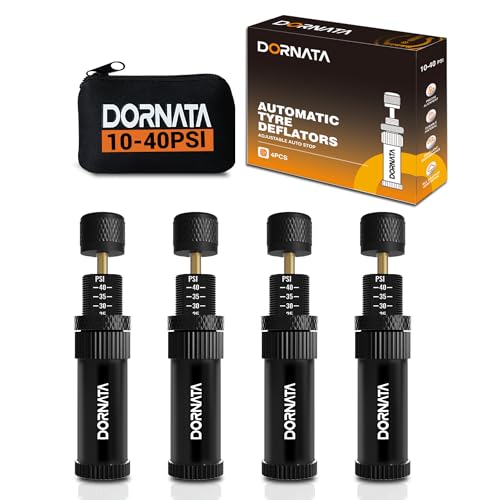
Match the connector and flow to your tires; check the duty cycle before you rely on it.
See options on Amazon


Current Amazon results
Match the connector and flow to your tires; check the duty cycle before you rely on it.
See options on Amazon
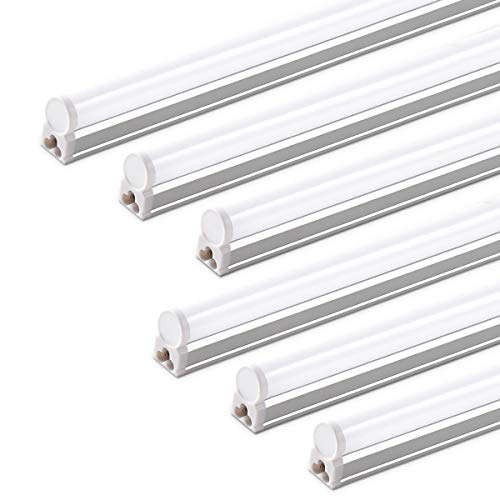

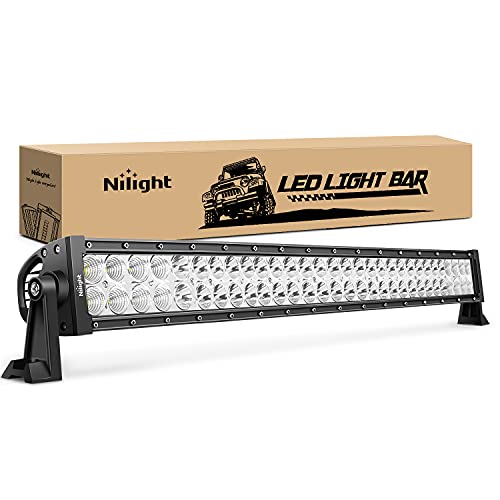
Current Amazon results
Check voltage, wiring needs and local rules on aux lighting before you buy.
See options on Amazon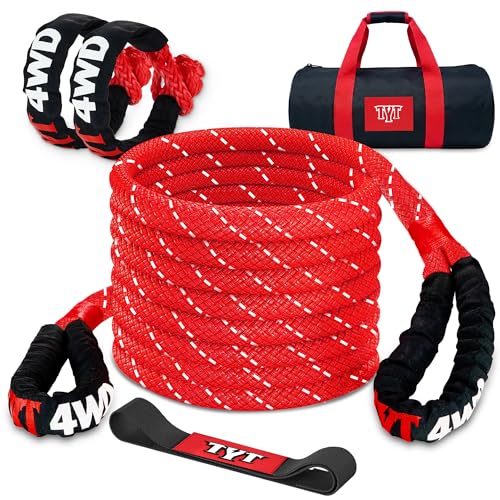


Current Amazon results
Check the maker's stated rating against your vehicle weight and never use a damaged one.
See options on AmazonAir and a gauge, a tire plug kit, traction boards and a shovel, water, a first-aid kit, a charged phone with an offline map and a way to tell someone your route. Add a radio and recovery straps as you travel with groups.
No. Easy, well-used trails with other traffic need less. The checklist scales with distance from help and the size of the group. A short list you have practised with beats a long one you have not.
Secure heavy items low and forward, keep recovery gear reachable, and keep loose objects out of the cabin. Our cargo organization guide shows layouts that keep gear from shifting on rough ground.
Rank items by the failure they prevent. A flat tire without air or a plug ends the trip, so air and repair come first. Then traction, then pulled recovery, then comfort.
Sometimes. Read what is in the box and check each item has a stated rating. A bundle with unrated hardware is a poor deal at any price.
No. Carry redundancy where a single failure strands you: air, a plug kit, a way to power a radio. Everything else can be replaced after the trip.
Last checked 2026-11-12. Each link was opened and read on that date.
This guide reflects independent editorial research, not first-hand product testing, professional mechanical training, or rescue certification. Some links on this page are Amazon Associates affiliate links; see our affiliate disclosure.