Overview
A beginner off-road gear checklist should cover five general areas: vehicle and recovery basics, navigation and communication, water and first aid, general trip supplies, and a way to keep it all organized. You don't need to buy everything at once -- most new off-roaders build a kit gradually, adding items as they take on longer or more remote trips.
This guide walks through what each category typically includes and why it matters, without recommending specific brands, prices, or performance claims. Every vehicle and trip is different, so treat this as a starting framework rather than a fixed shopping list.
Before anything else, confirm your vehicle itself is trip-ready. See our maintenance and safety hub for a pre-trip check framework, since no amount of gear substitutes for a mechanically sound vehicle.
It also helps to think about your checklist in terms of trip length rather than a single fixed list. A short local trail day has different needs than a full-day route through unfamiliar terrain, and both differ from an overnight trip. Build a core kit that covers the basics for any outing, then add trip-specific items on top of it.
Vehicle and recovery basics
Even a short beginner trail day benefits from a few vehicle-related basics: a full-size or usable spare tire, a jack rated for your vehicle's weight, a tire-pressure gauge, and basic tools for roadside adjustments. If your route includes any chance of getting stuck, a general recovery item such as a tow strap can be useful, but only if you understand its rated capacity and how to use your vehicle's recovery points safely.
We intentionally don't recommend specific recovery techniques here, because the right approach depends heavily on your vehicle, the terrain, and your own experience level. Our recovery gear hub covers how to think through a recovery kit in more depth, including how equipment selection should be matched to your vehicle and training rather than treated as one-size-fits-all.
If you're new to off-roading, it's reasonable to start with a smaller kit and expand it as you take on more demanding trails. A short, well-maintained beginner trail rarely requires the same level of recovery preparation as a remote, multi-day route.
Navigation and communication
Cell coverage disappears quickly once you leave paved roads, so it's worth having a navigation and communication plan that doesn't depend on it. A downloaded offline map, a dedicated GPS unit, or a paper map and compass as backup are all reasonable options depending on your comfort level.
For communication, options range from a simple two-way radio for short-range convoy chatter to a satellite communicator for remote areas with no cell service at all. Choose based on how far off the grid your typical trips go -- a satellite device makes more sense for remote overland routes than for a well-traveled local trail.
Whatever you choose, share your planned route and expected return time with someone who isn't coming along. This single habit does more for your safety than most individual pieces of gear.
| Trip type | Typical navigation need |
|---|---|
| Short, well-known local trail | Offline map app or paper map as backup |
| Unfamiliar day trip | Dedicated GPS unit plus a shared route plan |
| Remote or multi-day overland route | Satellite communicator plus offline maps |
Water, food, and first aid
Carry more water than you think you'll need, plus a reasonable safety margin in case a trip takes longer than planned. The right amount depends on trip length, group size, and climate, but erring on the side of extra water is rarely a mistake.
A basic first-aid kit belongs in every vehicle, off-road or not, but it's especially important on trails where help may be farther away. Know where it's stored and check periodically that supplies haven't expired or been used up from a previous trip.
For food, simple, shelf-stable options are usually enough for a day trip. Longer or overnight trips call for more planning -- see our off-road camping hub for food, water, and cooking guidance specific to vehicle-based camping.
Browse our recommended gear
Our featured picks refresh periodically. While we update them, our editorial guides can help you find the right gear for your rig.
See our guidesStorage and organization
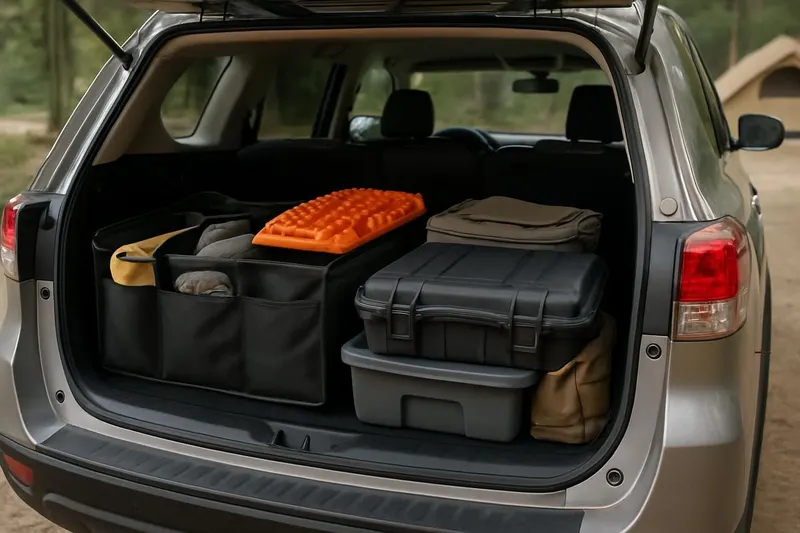
As your gear list grows, organization becomes as important as the gear itself. Loose items sliding around a cargo area are, at best, annoying and, at worst, a safety hazard during rough terrain. General-purpose cargo bags, bins, or a simple drawer system can keep frequently used items accessible while securing everything else.
Group gear by purpose -- recovery items together, first aid together, navigation and communication together -- so you're not searching through the whole vehicle when you need one specific item. A consistent system also makes it easy to notice if something is missing before you leave.
Secure heavier items low and toward the vehicle's center when possible, and avoid stacking loose gear high enough to become a hazard during sudden stops or rough sections of trail.
Seasonal and climate considerations
A gear checklist that works well in summer often needs adjustment for colder months, and vice versa. Cold-weather trips generally call for extra layers, a way to stay warm if you're stopped for an extended period, and awareness that batteries and some electronics perform less reliably in low temperatures. Hot-weather trips shift the emphasis toward extra water, sun protection, and monitoring your vehicle for signs of overheating on sustained climbs.
Wet or muddy conditions raise the value of traction aids and a way to clean mud off critical components like lights and door seals before it hardens. Dusty, arid conditions favor air filtration awareness and extra water for both people and, in some cases, a vehicle's cooling system. None of this requires a completely different kit -- it's usually a matter of adjusting quantities and adding a few climate-specific items to the core checklist described above.
It's also worth checking regional conditions specific to your route. Elevation changes, sudden weather shifts, and seasonal trail restrictions can all affect what you should pack, even for a trip that starts in mild conditions at the trailhead parking area.
Packing mistakes to avoid
A common beginner mistake is buying a large amount of gear all at once, based on what looks impressive rather than what a specific trip actually requires. It's more useful to build a kit gradually, matched to the trips you actually take.
Another mistake is packing recovery or safety gear without learning how to use it. Equipment sitting unused in a cargo area doesn't help if you don't know your vehicle's rated recovery points or how to operate what you've packed. Consider seeking hands-on instruction before relying on unfamiliar gear in the field.
Finally, avoid treating a packing list as a one-time task. Conditions, trip length, and group size change from trip to trip, so a quick review of your kit before each outing -- checking expiration dates, tire condition, and battery levels -- is worth the extra few minutes.
Final thoughts
A solid beginner off-road kit doesn't need to be expensive or extensive on day one. Start with vehicle basics, navigation and communication, water and first aid, and a simple storage system, then expand based on the specific trips you take. See our off-road gear hub for category-level picks, and our trail skills hub for beginner terrain and route-planning concepts to pair with your gear.
As you gain experience, revisit your kit every season or two. What worked for a handful of local day trips may not be enough once you start taking longer routes, traveling in a group, or exploring more remote terrain. Treat your gear list as something that evolves alongside your experience, rather than a purchase you make once and never reconsider.