Overview
All-terrain and mud-terrain tires are both designed for off-pavement use, but they make different trade-offs. All-terrain tires generally balance on-road comfort and quiet operation with moderate off-road capability, while mud-terrain tires prioritize aggressive grip in soft, loose conditions at some cost to on-road comfort and noise. Neither is universally "better" -- the right choice depends on how much of your driving happens on pavement versus trail, and what kind of terrain you actually encounter.
This guide compares the two categories across the factors that matter most for a beginner or intermediate decision, without claiming specific performance numbers that vary by brand, model, and size. See our tires and wheels hub for broader tire and pressure guidance.
Tread design differences
All-terrain tread patterns typically use smaller, more closely spaced tread blocks with siping (small slits in the tread) designed to maintain grip across a range of surfaces, including wet pavement, gravel, and light off-road terrain. The tighter pattern tends to run quieter and wear more evenly on paved roads.
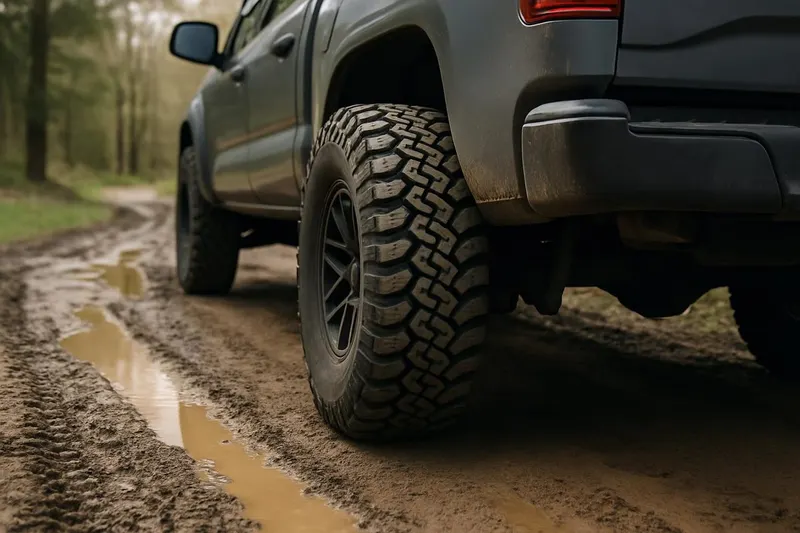
Mud-terrain tread patterns generally use larger, more widely spaced, and more aggressive tread blocks designed to bite into soft or loose surfaces and self-clean -- shedding mud and debris as the tire rotates -- more effectively than a tighter pattern. This aggressive design is what gives mud-terrain tires an edge in deep mud, loose rock, and similarly soft, low-traction conditions.
On-road comfort and noise
All-terrain tires generally provide a smoother, quieter ride on pavement compared to mud-terrain tires, whose larger tread blocks tend to generate more road noise, particularly at highway speeds. If most of your driving happens on paved roads with occasional trail use, that noise and comfort difference is worth weighing seriously, since it's something you'll experience on every commute, not just trail days.
Mud-terrain tires can still be a reasonable choice for drivers who accept the noise trade-off in exchange for capability in more demanding terrain, but it's a trade-off worth test-driving or researching carefully rather than assuming it won't matter to you.
Browse our recommended gear
Our featured picks refresh periodically. While we update them, our editorial guides can help you find the right gear for your rig.
See our guidesWear and fuel considerations
Mud-terrain tires often wear faster on paved roads than all-terrain tires, since their softer, more aggressive compounds and tread design aren't optimized for consistent highway contact. Fuel efficiency can also be modestly affected by the more aggressive tread pattern, though the exact effect varies by tire model, vehicle, and driving style, and we don't have verified figures to cite here.
If most of your annual mileage is on-road with occasional off-road trips, an all-terrain tire may offer better overall value simply due to slower wear over the miles that make up most of your driving. If off-road use is frequent and demanding, the durability and traction benefits of a mud-terrain tire in that specific context may outweigh the on-road trade-offs.
Climate and terrain fit
In wet, sandy, or rocky mixed-use conditions, all-terrain tires often perform adequately without the on-road compromises of a mud-terrain tire. In deep mud or very loose, soft terrain, mud-terrain tires' aggressive, self-cleaning tread tends to hold an advantage.
Snow performance varies significantly by specific tire model and compound rather than category alone -- some all-terrain and mud-terrain tires include snow-rated certifications while others don't, so check the specific tire's documentation rather than assuming either category is automatically better in snow.
| Condition | Where all-terrain tends to do well | Where mud-terrain tends to do well |
|---|---|---|
| Paved commuting | Quieter, smoother ride | More road noise, faster wear |
| Deep mud | Can struggle to self-clean | Aggressive tread sheds mud more effectively |
| Mixed gravel/dirt | Balanced, adequate grip | Capable, with more noise trade-off |
| Snow | Varies by specific model | Varies by specific model |
Hybrid and rugged-terrain options
Between the two main categories, many tire manufacturers also offer "rugged-terrain" or "hybrid" tires designed to split the difference -- more aggressive than a standard all-terrain pattern, but quieter and more road-friendly than a full mud-terrain design. These can be worth considering if neither end of the spectrum feels like a clean fit for your driving mix.
As with the two main categories, treat manufacturer marketing language around hybrid tires with some skepticism and compare documented specifications -- load rating, speed rating, and any published traction or snow certifications -- rather than relying on category labels alone. A tire's actual construction and compound matter more than which marketing bucket it falls into.
It's also worth reading independent, disclosed reviews and asking other drivers with a similar vehicle and use case what they've experienced, since real-world performance can vary from what a spec sheet suggests, and we don't have first-hand testing results to share here.
Sizing and load rating
Regardless of which tread category you choose, the tire's size and load rating need to match your vehicle's specifications. Going larger than your vehicle's factory tire size can affect speedometer accuracy, clearance with body panels or suspension components, and in some cases may require other upgrades to avoid rubbing or handling issues.
Load rating -- the maximum weight a tire is designed to carry at a specified pressure -- should meet or exceed your vehicle's requirements, especially if you frequently carry heavy cargo or camping gear. Your vehicle's door jamb sticker or owner's manual lists the factory-specified tire size and load requirements; use that as your starting reference point rather than guessing.
If you're considering a size change as part of a broader upgrade, it's worth confirming compatibility with a knowledgeable tire shop or your vehicle's owner's manual before committing, since an otherwise great tire in the wrong size can create more problems than it solves.
Browse our recommended gear
Our featured picks refresh periodically. While we update them, our editorial guides can help you find the right gear for your rig.
See our guidesRotation and inspection after trail use
Whichever category you choose, regular rotation helps even out wear, particularly since off-road driving can wear tires unevenly depending on terrain and driving style. Follow your tire manufacturer's recommended rotation interval as a starting point, and adjust if you notice uneven wear developing sooner than expected.
After trail use, a quick post-trip inspection is worth adding to your routine: check for embedded rocks or debris in the tread, look for sidewall cuts or bulges that weren't there before, and confirm pressure has been readjusted back to your normal on-road setting if you aired down for the trail. Catching a developing issue after one trip is much easier than discovering it's become a bigger problem after several.
See our maintenance and safety hub for a broader post-trail inspection framework that covers more than tires alone.
How to decide
Start by estimating what share of your driving is on pavement versus trail, and how demanding that trail driving typically is. A driver who spends most of their time commuting with occasional light trail use is a strong candidate for all-terrain tires. A driver who regularly tackles muddy or loose, technical terrain may find the on-road trade-offs of mud-terrain tires worthwhile.
It's also reasonable to reassess this choice over time as your driving habits change, rather than treating it as a permanent decision. Whichever category you choose, confirm the specific tire's size and load rating match your vehicle's requirements before purchase.
Final thoughts
All-terrain and mud-terrain tires represent different points on the same spectrum, not a strictly better-or-worse comparison. Weigh your actual driving mix, the terrain you regularly encounter, and how much on-road noise and wear you're willing to accept, and choose based on your specific situation rather than general reputation alone.
If you're still unsure after weighing these factors, it's reasonable to start with an all-terrain tire for your first set and reassess after a season of real-world use. Tire choice is one of the more reversible upgrade decisions -- unlike a suspension or protection upgrade, a full tire set naturally needs replacement periodically, giving you a built-in opportunity to change direction if your first choice doesn't match your actual driving.