
Wheel Offset and Backspacing Calculator
Worked example
Going from an 8 in wheel at +25 mm to a 9 in wheel at -12 mm: the overall width goes from 9 to 10 in, and the mounting surface sits behind the centerline instead of in front of it. The outer face moves out by about 2.0 in while the inner edge moves about 1.0 in away from the suspension, so the wheel needs fender room on the outside even though it clears the springs better inside.
5.48 in backspacing, wheel A
| Measure | A | B |
|---|---|---|
| Rim width | 8.0 in | 9.0 in |
| Offset | +25 mm | -12 mm |
| Backspacing (inner lip to mounting surface) | 5.48 in | 4.53 in |
| Outer lip to mounting surface | 3.52 in | 5.47 in |
| What changes | Result |
|---|---|
| Outer face (poke) | 1.96 in further out |
| Inner edge (clearance to suspension) | 0.96 in further from the suspension |
Backspacing is approximate: overall wheel width is taken as rim width + 1 in for the two bead flanges. Measure a real wheel to confirm.
How to use this tool
- Enter your wheel
Fill in rim width in inches and offset in millimeters. If you know backspacing instead, enter it and leave offset alone. - Add the wheel you are considering
Enter wheel B. Leave rim width blank to look at one wheel only. - Read poke and inner clearance
Poke is how far the outer face moves. Inner clearance is how far the inner edge moves toward the springs, control arms and brake lines.
Off-road gear on Amazon
SponsoredAs an Amazon Associate, Off Road Freedom earns from qualifying purchases. See our affiliate disclosure.
KSP 6X5.5 Wheel Spacers for Silverado Sierra,1.5 inch(38mm) Real Forged Spacers with 78.1mm Hub Bore M14x1.5 Studs fit for Tahoe Avalanche Express Suburban Sierra Yukon
$149.99
View on Amazon (KSP 6X5.5 Wheel Spacers for Silverado Sierra,1.5 inch(38mm) Real Forged Spacers with 78.1mm Hub Bore M14x1.5 Studs fit for Tahoe Avalanche Express Suburban Sierra Yukon)White Knight M12x1.50 Solid Piece Bulge Acorn Lug Nuts (NO Cap) for Select Aftermarket & Factory Wheels, EZ to Install, Durable Carbon Steel, Stylish Triple Layer Chrome Finish - 1907S-20AM (20 Pack)
$15.99
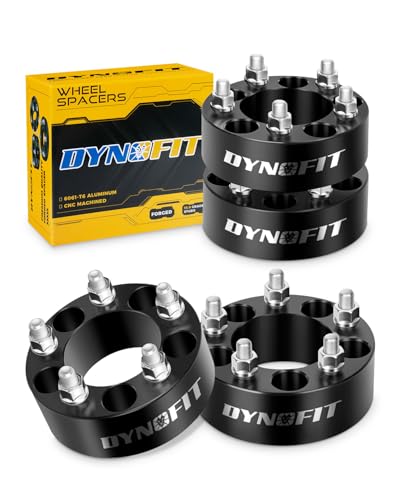
View on Amazon (White Knight M12x1.50 Solid Piece Bulge Acorn Lug Nuts (NO Cap) for Select Aftermarket & Factory Wheels, EZ to Install, Durable Carbon Steel, Stylish Triple Layer Chrome Finish - 1907S-20AM (20 Pack))Dynofit 2 inch 5x4.5 Wheel Spacers for XJ KJ KK TJ ZJ, 80.5mm Hub Bore, 1/2"-20 Thread Pitch 5x114.3 Forged Spacer for Mustang Explorer Ranger Cherokee Wrangler Liberty Grand Cherokee
$97.99
View on Amazon (Dynofit 2 inch 5x4.5 Wheel Spacers for XJ KJ KK TJ ZJ, 80.5mm Hub Bore, 1/2"-20 Thread Pitch 5x114.3 Forged Spacer for Mustang Explorer Ranger Cherokee Wrangler Liberty Grand Cherokee)HERONIX 3/8-Inch Drive Click Torque Wrench, 5–50 Ft-Lb (6.8–67.8 Nm) ±3% Accuracy, Loud Click, Dual Scale, 72-Tooth Mini Torque Wrench for Bike, Motorcycle, Car & Spark Plug Maintenance
$20.70$18.52
View on Amazon (HERONIX 3/8-Inch Drive Click Torque Wrench, 5–50 Ft-Lb (6.8–67.8 Nm) ±3% Accuracy, Loud Click, Dual Scale, 72-Tooth Mini Torque Wrench for Bike, Motorcycle, Car & Spark Plug Maintenance)32pc 14x1.5 OEM Lug Nuts for 2008-2026 Chevy Silverado GMC Sierra 2500 3500 | M14-1.5 One-piece Design Chrome Large Acorn Seat Wheel LugNuts, 1.75" Height 7/8" Hex, GM Part No 611-236 9596070
$44.59
View on Amazon (32pc 14x1.5 OEM Lug Nuts for 2008-2026 Chevy Silverado GMC Sierra 2500 3500 | M14-1.5 One-piece Design Chrome Large Acorn Seat Wheel LugNuts, 1.75" Height 7/8" Hex, GM Part No 611-236 9596070)INGJER Torque Wrench 1/2, 10-180ft.lb, UPGRADE Torque Wrench Auto | 13.6 - 244.1Nm, ±3% Dual-Direction, 72 Tooth 1/2 torque wrench for Engine, Suspension & Spark Plug Maintenance
$28.49
View on Amazon (INGJER Torque Wrench 1/2, 10-180ft.lb, UPGRADE Torque Wrench Auto | 13.6 - 244.1Nm, ±3% Dual-Direction, 72 Tooth 1/2 torque wrench for Engine, Suspension & Spark Plug Maintenance)





Prices and availability were accurate when retrieved from Amazon and may change. Retrieved Nov 12, 2026.
How it is calculated
- Backspacing (in) is about (rim width + 1) / 2 + offset (mm) / 25.4. The +1 in approximates the two bead flanges.
Results are nominal. Real tires differ by maker and tread, and the maker's spec sheet lists the actual diameter.
Frequently asked questions
What is wheel offset?
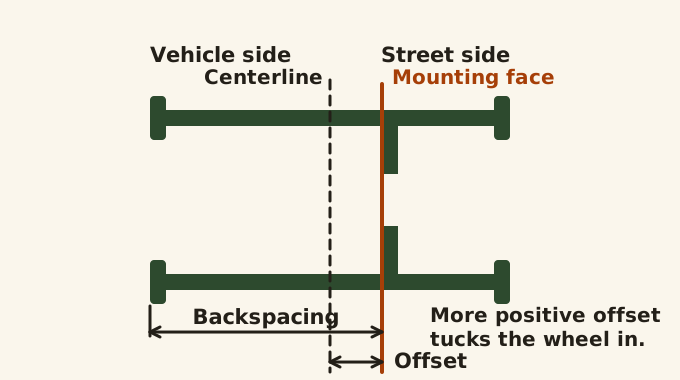
It is the distance from the wheel's mounting surface to the wheel's centerline. Positive offset puts the mounting surface toward the street side, which pulls the wheel in; negative offset pushes the wheel out.
What is backspacing and how does it relate to offset?
Backspacing is the distance from the mounting surface to the inner edge of the wheel. It grows with rim width and with positive offset. This tool estimates it as half the overall width plus the offset.
Why is overall width rim width plus 1 inch?
A wheel's rim width is measured between the bead seats. The two bead flanges add roughly an inch overall, so the tool uses that to estimate the lip positions. Measure a real wheel if the answer is critical.
Which way does a lower offset move the wheel?
A lower (more negative) offset moves the wheel outward, so it sits closer to the fender and further from the suspension.
Does a wider wheel always stick out more?
A wider wheel grows both ways from its centerline. With the same offset it adds about half the extra width to each side, so it pokes out and also moves the inner edge inward.
Are wheel spacers the same as changing offset?
A spacer moves the mounting surface outward, which has the effect of a lower offset. It adds a joint and a stud-length question, so read the maker's guidance.
Link to this tool
Your numbers are saved in the link, so anyone who opens it sees the same result.
Sources
Last checked 2026-11-12. Each link was opened and read on that date.
- Method Race Wheels: Offsets explained: Offset is the distance from the mounting surface to the wheel centerline; positive sits toward the car, negative pushes the wheel out.
This guide reflects independent editorial research, not first-hand product testing, professional mechanical training, or rescue certification. Some links on this page are Amazon Associates affiliate links; see our affiliate disclosure.