What Counts as a Vehicle-Camping Sleeping System?
When people talk about vehicle camping sleeping systems, they usually mean any setup that lets you sleep inside or alongside your rig with a reasonable balance of comfort, speed, and trail practicality. That can include a flat cargo-area mattress, a fold-out platform bed, a rooftop tent, an air mattress in the back of an SUV, a sleeping cot inside a van, or even a modular combination of pads, blankets, and window coverings. The right choice depends less on trend and more on how you travel.
For some campers, the best sleeping system is the one that turns a daily driver into a weekend base camp in five minutes. For others, the priority is preserving cargo space for tools, recovery gear, coolers, and dry storage. The main categories all solve the same problem in different ways: they create a flat and insulated place to sleep, limit hassle after a long day on the trail, and work within the space your vehicle actually offers.
It helps to think in terms of tradeoffs. More comfort often means more bulk. More convenience can mean less room for gear. Faster setup can mean fewer customization options. Once you understand those tradeoffs, comparison becomes much easier and you can narrow the field based on how you camp most often, not just how you picture the perfect trip.
The Main Types and How They Differ
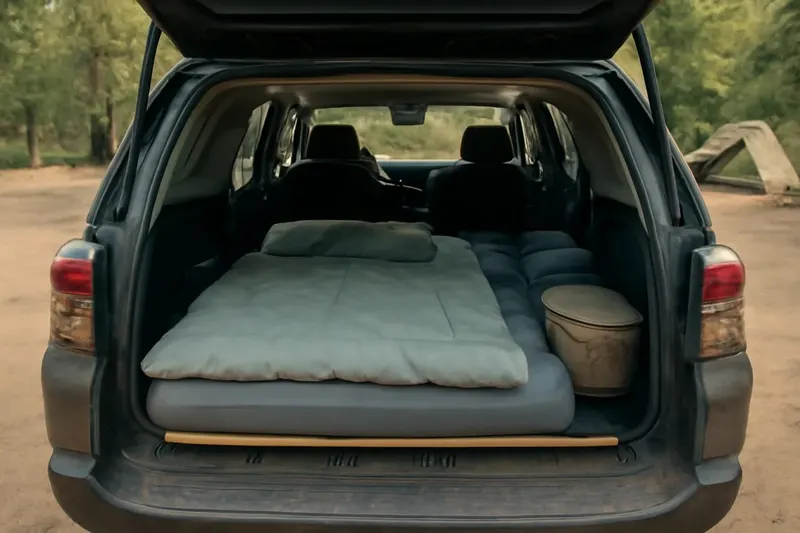
The most common vehicle camping sleeping systems fall into a few broad groups. Cargo-area mattresses and sleeping pads are popular because they are simple, relatively light, and easy to remove. They work well in SUVs, wagons, hatchbacks, and some crossovers where folded seats create a long enough surface. Their biggest strengths are flexibility and low complexity. Their main limits are uneven surfaces and reduced room for gear if the bed platform shares space with the rest of the cabin.
Platform beds take a more structured approach. These systems use a raised frame or deck to create a flatter sleeping area and, in many cases, usable storage beneath. They are appealing for longer trips because they can organize gear neatly and improve sleep comfort. The tradeoff is weight, added build complexity, and the fact that they usually reduce the vehicle’s ability to switch quickly between passenger mode and camp mode.
Rooftop tents move sleeping outside the vehicle cabin entirely. They can free up interior space for storage and make it easier to keep dirty gear separate from bedding. They often feel more campsite-oriented than interior setups. Their drawbacks include wind exposure, extra setup overhead compared with a simple mattress, and the need to consider roof load, ladder access, and the added bulk on top of the vehicle.
Cots and modular sleep kits sit somewhere in the middle. A cot can improve airflow and reduce the feeling of sleeping directly on a hard surface, while modular kits pair pads, blankets, and support pieces to fit unusual interiors. These systems are especially useful when the goal is a practical, adaptable sleep solution rather than a fully built-out camper conversion.
Comfort Is Not Just Softness
Comfort in a vehicle camping sleep system is about more than whether the bed feels plush on the first touch. A good setup keeps pressure points under control, supports your preferred sleeping position, and stays usable after a full day of driving, trail dust, and gear management. If you sleep on your side, a thin pad on a hard surface may feel fine for an hour but become distracting overnight. If you sleep on your back, a flatter, more even surface may matter more than cushion alone.
Temperature control also affects comfort more than many beginners expect. Sleeping directly against cold metal or thin plastic can pull heat away quickly, especially in shoulder seasons. That is why insulation matters alongside padding. Some systems naturally create an air gap, while others benefit from a simple sleeping mat or insulated base layer. Ventilation matters too, because moisture can build up in enclosed spaces and make bedding feel damp or clammy by morning.
Noise is another comfort factor that gets overlooked. A system that shifts, squeaks, or requires repeated adjustment can be more tiring than a slightly firmer but stable setup. If your route includes rough roads, washboard sections, or frequent stops, stability becomes part of comfort. The best vehicle camping sleeping systems reduce the number of small annoyances that chip away at rest.
Setup Time and Camp Routine
One of the most practical ways to compare vehicle camping sleeping systems is by the time they take to deploy after you arrive. A simple mattress or sleeping pad can be ready almost immediately, which is valuable if you roll into camp late or change locations often. That quick setup also makes short weekend outings easier because camp chores stay minimal.
Platform systems and rooftop tents usually take longer to prepare, but they can repay that time with a more structured sleep space. A platform bed may only need bedding arranged, yet it often requires clearing cargo and setting up storage before the first night. A rooftop tent can be relatively quick once you know the routine, but it still asks for climbing, securing entry points, and managing fabric or shell components in wind or low light.
Camp routine matters because the sleeping system influences the rest of your evening. If you want to cook, sort gear, and get to bed with minimal disruption, a simple interior setup may be the easiest fit. If you tend to stay in one place for multiple nights and enjoy a more organized base camp, a more elaborate system can feel worthwhile. The right choice depends on how much you value speed versus structure.
Browse our recommended gear
Our featured picks refresh periodically. While we update them, our editorial guides can help you find the right gear for your rig.
See our guidesSpace Management and Gear Storage
Vehicle space is limited, and sleeping systems compete directly with other essentials. Recovery gear, water, food, clothing, power supplies, and trail tools all need a place to live. That is why storage is often the deciding factor, especially for people who camp out of the same vehicle they use for exploring dirt roads or remote trailheads. A sleep system that looks comfortable on paper can become frustrating if it leaves nowhere for the rest of your kit.
Interior mattresses and pads usually preserve the most flexibility because they can be removed or repositioned. They are a strong choice for drivers who need the vehicle to return to normal duty on weekdays. Platform beds make better use of vertical space by storing items underneath, but they can be harder to access once packed. Rooftop tents protect interior cargo space, yet they add roof-mounted bulk and can make loading the top of the vehicle more complicated.
It is worth mapping your regular loadout before buying anything. Measure sleeping length, width, and the usable height of your cargo area or roof line. Then think about how much of the vehicle must remain available for coolers, tools, batteries, or muddy gear. A system that looks small in marketing photos may still block tailgate access or make rear storage inconvenient. Good space management is not about maximizing every inch; it is about making the arrangement you use most often the easiest one to live with.
Durability, Weather, and Trail Practicality
Trail practicality means a sleeping system can handle real use, not just a perfect campground. Dust, moisture, rapid temperature swings, and rough roads all test how well a setup holds up. Simple systems often win here because there are fewer moving parts. A durable mattress cover, a washable sleeping bag, and a clean interior can be easier to maintain than a more complex bed that must be assembled and protected from the elements every trip.
Weather exposure is a key difference between interior systems and rooftop tents. Sleeping inside the vehicle usually offers better shelter from wind and rain, while rooftop options place you closer to the weather. That is not automatically a drawback, but it does mean you should think carefully about fabric quality, condensation management, and how you will access the tent in changing conditions. If your trips often include cold mornings or unsettled weather, insulation and moisture control deserve attention.
Durability also includes how a system survives repeated packing and unpacking. Inflatable components should be handled with care to avoid punctures. Folding platforms should be checked for secure fasteners and stable hinges. Cots should be set up on level ground and used within their intended limits. The goal is not to overcomplicate maintenance; it is to choose a system that fits the kind of abuse your travel pattern creates.
How to Choose for Your Style of Camping
The best comparison starts with honest use-case questions. Do you sleep in your vehicle every trip, or only when weather turns bad? Do you stay at established campsites, or do you move often between trail segments and overland stops? Do you travel solo, with a partner, or with pets and extra bags? Answers like these matter more than a generalized ranking of which system is best overall.
If you want the simplest path, interior pads and mattresses are usually the least intimidating. If you want a more organized long-trip base camp, a platform bed can make the vehicle feel more purpose-built. If you want to keep the cabin open and separate sleeping from cargo, rooftop tents can be attractive. If flexibility matters most, modular systems let you adjust around season, cargo, and trip length.
Another useful approach is to think about transition time. A system that works well for a Friday night arrival may become annoying on a multi-stop route if it takes too long to reset. Likewise, a setup that seems minimal for one person may feel cramped once you add a second sleeper or additional interior gear. The right choice is not the one that does everything; it is the one that performs reliably in the situations you actually face.
A Simple Comparison Checklist
Before buying or building, compare each option against a short checklist. Start with sleep dimensions: length, width, and usable headroom. Then look at comfort, including support, insulation, and whether the surface stays flat through the night. After that, evaluate setup time, because a system you avoid using is not a good system no matter how clever it seems.
Next, consider storage impact. Ask how the setup changes access to gear, rear doors, and daily-driver function. Review durability by thinking about the surfaces, seams, and moving parts that will take repeated use. Finally, account for weather and cleaning. If your trips are dusty, wet, or muddy, a system that is easy to wipe down and dry will usually be more sustainable over time.
That checklist keeps the decision practical. It also helps prevent buying based only on photos or feature lists. A strong vehicle camping sleep setup should make your trip easier before bed, during the night, and when breaking camp in the morning. If it only solves one part of the equation, there may be a better fit elsewhere.