Define the Kitchen Zone Before You Pack
Good camp kitchen organization starts before the first tote is loaded. Pick one primary container or zone for food prep, one for cooking tools, and one for cleanup so each item has a home. That simple split keeps you from digging through a single pile for a lighter, a spatula, or the coffee filter. It also makes packing faster because the same items return to the same place after every trip.
Think in tasks, not just objects. A basic camp kitchen usually needs categories for cooking, eating, water, and waste, plus a small grab-and-go section for morning coffee or quick trail snacks. When those functions are separated, setup at camp feels orderly instead of improvised, and the work surface stays clearer. For off-road travel, that matters because a stable layout saves time when daylight is fading or conditions are dusty and windy.
One useful habit is to make a short inventory list and keep it inside the main kitchen bin. That list helps you check essentials before departure and again when breaking camp, which reduces forgotten utensils and half-empty containers. Labeling bins or pouches by function also helps passengers or trip partners find what they need without unpacking everything. The goal is not a perfect kitchen; it is a repeatable system that holds up when the trail gets busy.
As you build the system, keep the most used items easiest to reach. If you cook breakfast first, put coffee gear, fuel, and a pan near the top or in a front pocket. Less frequent items, such as extra serving pieces or backup spices, can live deeper in the kit. That simple hierarchy supports camp kitchen organization because it matches the way people actually cook outdoors.
Choose Containers That Stack Cleanly
The best camp kitchen organization tools are usually the simplest ones. Stackable bins, zip pouches, hard-sided cases, and clear storage boxes make it easier to group like items and protect them from dust and bumps. Rigid containers help with fragile gear such as cups, plates, and glass spice jars, while soft bags work well for towels, tablecloths, and collapsible items. The key is to match the container to the item instead of forcing everything into one style of storage.
Clear or lightly labeled containers save time at camp because you can spot contents without opening every bag. That matters when the truck is unloaded in low light or when you need one utensil quickly and do not want to scatter supplies across the tailgate. Keep heavy items low and balanced so bins do not tip while driving rough roads. If a container rattles, add padding or regroup the contents so the ride stays quieter and the gear stays organized.
Modular storage works especially well for families or mixed trip groups. One person can pack the main cooking bin, another can handle food, and a third can manage cleanup supplies if the containers are clearly separated. Even a small kitchen benefits from this structure because each category stays consistent trip after trip. When every piece has a defined place, repacking after dinner becomes a quick reset rather than a chore that drifts into the next morning.
Keep an eye on lids, closures, and handles as well. A container that seals well and opens easily is more useful than one with extra features you never need. Over time, you will notice which bins are too deep, too narrow, or too hard to clean, and you can adjust the system without rebuilding it from scratch. That gradual refinement is part of practical camp kitchen organization and often matters more than buying more gear.
Pack by Meal and Task
Meal-based packing is one of the easiest ways to improve camp kitchen organization. Instead of scattering ingredients and tools across multiple boxes, group them by use: breakfast, lunch, dinner, and snacks. A breakfast kit might include coffee items, a small pan, stirring tools, and quick foods, while dinner gear might hold a pot, cutting board, and serving utensils. When the day’s first meal is its own package, you can start cooking with less searching and less clutter.
Task-based packing works just as well for cleanup and prep. Keep dish soap, sponge, trash bags, paper towels, and a drying towel in one cleanup pouch so you can reach for it in seconds after eating. A prep kit can hold knives, board, measuring tools, and seasonings, which keeps the actual cooking area cleaner. This approach reduces duplicates, because one reliable set of tools can move with the task instead of being spread across several containers.
It also helps to pack in the order you will use things. Items needed first should sit on top or near the opening, while extras go deeper inside the bin. That small decision matters when camp is dark, cold, or windy and nobody wants to unpack everything just to make coffee. A little planning before departure pays off every time you open the kitchen at camp, because the layout already matches the rhythm of the meal.
For longer trips, separate perishables from dry goods and keep both systems consistent. Dry foods do best in sealed containers, while perishables should be packed with whatever cooling method you use and checked often. If you know which foods belong to which meal, it becomes easier to see what still needs attention and what can stay tucked away. That clarity is one of the biggest benefits of camp kitchen organization because it cuts down on waste and avoids a messy, overpacked setup.
Browse our recommended gear
Our featured picks refresh periodically. While we update them, our editorial guides can help you find the right gear for your rig.
See our guidesSet Up for Fast Access at Camp
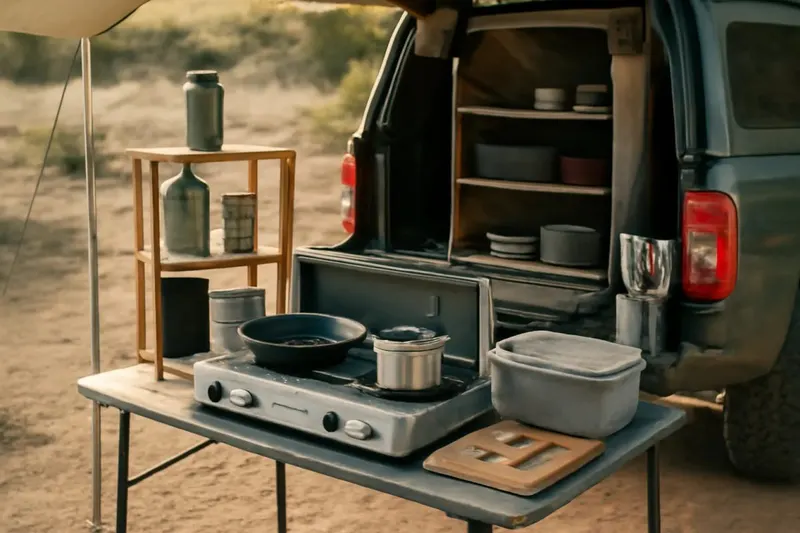
A good camp kitchen should feel ready as soon as the vehicle stops. The fastest setups are the ones built around reach, not just storage. Put the most common items where they can be opened and used with minimal movement, and create one flat surface for prep if possible. A simple layout with a cooking bin, a food bin, and a cleanup bin keeps the camp area from turning into a pile of open containers.
Think about the sequence of a normal meal. You need to wash hands or wipe down surfaces, gather ingredients, prep food, cook it, then clean up and store leftovers. If your bins and pouches follow that same order, you spend less time walking back and forth. Small touches like a dedicated lantern, a compact hand towel, or a utensil roll can make the whole process feel smoother because the tools appear in the order they are needed.
Storage inside the camp kitchen matters too. Use inner pockets, small pouches, or divided boxes for tiny items such as matches, lighters, bottle openers, spice packets, and foil. These items disappear easily in larger totes, and losing them can slow down the entire meal. A little structure at the smallest scale prevents a lot of frustration later, especially when conditions are dusty or you are trying to cook before sunset.
Once camp is established, resist the temptation to keep everything spread out. Return tools to their place as soon as they are clean, and close containers before moving on to the next step. That habit keeps insects, dirt, and clutter from taking over the cooking area. It also makes teardown easier because the kitchen is already halfway packed before the final dish is washed.
Keep Food Safe and Easy to Clean
Camp kitchen organization is not only about convenience; it also helps you manage food cleanly. Separate raw foods from ready-to-eat items, and keep utensils for each task from mixing together. Use sealable containers or bags that close securely so crumbs, spills, and odors stay contained during travel. A tidy system makes it easier to notice when something is leaking, missing, or needs to be cooled more carefully.
Cleanup supplies should be as accessible as cooking tools. A small hand-wash setup, wipes, towels, and trash storage should have a defined spot close to the prep area so nobody has to search for them mid-meal. Keep soap and wash water away from food staging, and set a routine for wiping surfaces before and after use. If the cleanup kit is visible and easy to reach, people are more likely to use it instead of letting the work surface get crowded.
Food storage deserves the same discipline. Dry goods should be protected from moisture, and anything perishable should be packed so it can be checked without opening the entire kitchen. Avoid overfilling containers, because crushed packaging and loose crumbs create avoidable messes. The cleaner the system, the easier it is to track what is still edible, what needs to be used first, and what can wait until the next meal.
Good habits also make teardown safer and simpler at the end of the day. Wipe tools before stacking them, empty food scraps promptly, and repack items only after they are dry enough to store. That prevents sticky residue and odor from building up trip after trip. A kitchen that stays clean is usually the one that stays organized, because every item returns to a predictable place.
Maintain the System Between Trips
The easiest camp kitchen to use is the one that is reset after every trip. When you get home, empty the bins, check for damaged lids or worn tools, and put everything back in its assigned spot. That quick review keeps clutter from migrating into the next outing and makes the next loadout far less stressful. If something never gets used, remove it before the kitchen becomes overpacked.
A simple restock routine is worth keeping on paper or in your phone. Refill seasonings, paper goods, fuel items, soap, and trash bags before the next outing so you are not scrambling on departure day. If you travel off-road often, you will notice that the same few items are always the first to run out, and those deserve a permanent spot on the checklist. This is where camp kitchen organization becomes a long-term system rather than a one-time setup.
Periodic cleaning also helps your gear last longer. Wipe out bins, air dry soft bags, and check for crumbs or spills that could attract odors or insects. Even durable storage eventually gets messy if it is never cleared out, and grime tends to hide in seams, corners, and pouches. Keeping things clean protects both the gear and the food you pack inside it.
Finally, revise the system after real use. If a bin is too heavy, split it. If a pouch is always misplaced, give it a clearer label or move it closer to the main kit. Small changes are often enough to make the kitchen more efficient on the next trip. The best organization is not the most complicated one; it is the one you can repeat without thinking.