Why Wheel Fastener Awareness Matters Off-Road
Wheel fastener awareness is a simple habit with outsized value when the terrain gets rough. Off-road vibration, repeated suspension movement, and changing wheel loads can expose a fastener issue that might stay hidden on pavement. A quick inspection routine helps you notice problems before they become a trail interruption. It also supports safer travel by reducing the chance of wheel movement, wobble, or avoidable damage.
For beginner drivers, the key idea is not complexity but consistency. Check the wheel fasteners before the trip, after any wheel removal, and again during the day if the route is especially rocky or long. Experienced drivers often fold this into their pre-trip and post-section walkaround, right next to tire pressure and visual wheel checks. The goal is steady attention, not obsessive tinkering, and that balance makes wheel fastener awareness easy to keep up. It also helps you build confidence because the routine becomes familiar instead of stressful.
Off-road driving adds variables that make small hardware issues more important. Mud can hide evidence of movement, dust can blur a quick glance, and a rough trail can make it harder to hear early warning signs. That is why a fastener check works best as part of a broader readiness habit, not as a one-time look. When you treat the wheels as a system that needs regular attention, you are less likely to miss a change that matters. The result is a more predictable vehicle and fewer surprises on a long day outside.
What to Look For During Inspections
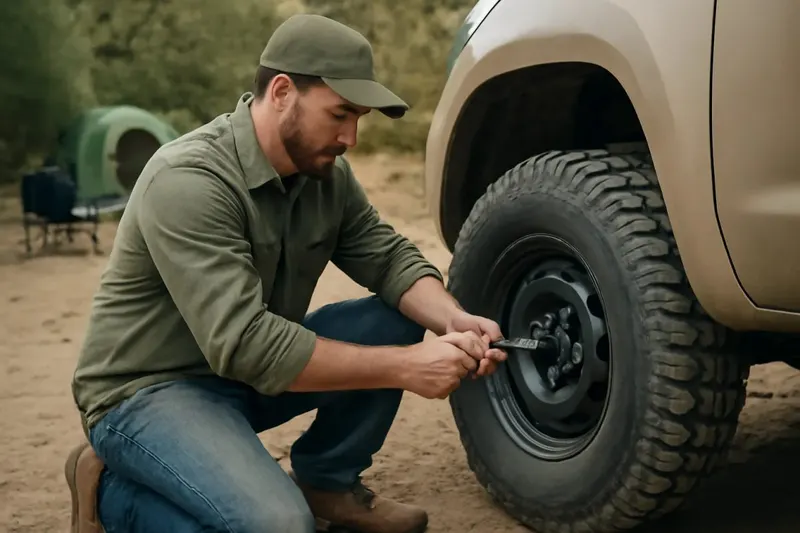
Start with a visual check that looks for anything out of place. Compare each wheel fastener for obvious gaps, uneven seating, rust streaks, damaged threads, or evidence that a washer or cap is missing. If a wheel has recently been off the vehicle, make sure every fastener looks uniformly settled and the wheel sits flush against the hub. A side-by-side glance at all four corners often reveals an issue faster than focusing on one wheel at a time.
Touch and sound matter too, but only as part of a careful routine. If you notice an unusual clunk, a fresh vibration, or a wheel that seems slightly different after a rough section, stop and inspect rather than assuming it is normal trail noise. Some drivers use a simple torque-check rhythm after initial installation and after the first miles of off-road use, then revisit it during longer days. The point is to catch movement early, not to guess from memory after the vehicle has already been shaking on the trail. A clean, consistent check is usually more useful than a hurried one performed in poor light or with mud still packed around the wheel area.
It also helps to look for signs that suggest the check should be repeated later. Fresh metal shine, displaced dirt around the fastener, or one wheel that looks visually different from the others can all justify another inspection. If you have multiple people using the vehicle, make sure everyone follows the same method so the results are easier to trust. A repeatable inspection is easier to remember when the day is busy and the route keeps changing. Over time, that consistency makes wheel fastener awareness feel less like a chore and more like normal trail preparation.
Tools and Habits That Support Good Checks
Good wheel fastener awareness depends on a few basic tools and a repeatable habit. A correctly sized lug wrench or socket, a reliable torque wrench, and a clean surface for handling hardware are usually enough for most drivers. Keeping those items organized in the vehicle or gear bag makes it more likely you will actually use them before and after trail runs. Even a small checklist can improve consistency when the day starts early or the route changes.
It also helps to treat wheel checks as part of a broader preparation pattern. Look at tire condition, wheel seating, visible damage, and any fresh marks around the fasteners at the same time. If your route includes washboard roads, repeated rock impacts, or a full day of slow crawling, build in a stop to inspect the wheels before fatigue sets in. That small pause is often easier than trying to reason through an issue after a vibration has already developed. A good routine also reduces the chance of forgetting a step when you are packing up in dust, heat, or fading light.
Organization matters because the best tools are only useful when they are easy to reach. Store the wrench and torque tool in a known location, keep the wheel hardware area clean enough to inspect, and avoid mixing loose items where they can get lost. If you regularly air down or swap wheels for trail use, make the check part of that same sequence so it happens naturally. Beginners benefit from the structure, while experienced drivers appreciate how a predictable setup saves time and reduces missed details. Simple preparation supports safer decisions later, especially when the trail day becomes longer than expected.
Browse our recommended gear
Our featured picks refresh periodically. While we update them, our editorial guides can help you find the right gear for your rig.
See our guidesWhen to Recheck Fasteners on the Trail
Rechecking fasteners is most useful at predictable moments rather than at random. After wheel removal, after changing a tire, after an obstacle that produced a sharp impact, and before heading home are all sensible times to look again. If you feel a change in steering, hear a new noise, or notice a wheel-related vibration, treat it as a prompt to stop and inspect. Wheel fastener awareness works best when it is tied to events you can remember without second-guessing.
Drivers often underestimate how much trail conditions can shift a vehicle’s hardware state over the course of a day. Slow rock sections, repeated suspension movement, heat cycles, and packed mud around the wheel area can create enough variation to justify another look. This does not mean stopping every few miles, but it does mean checking at planned intervals when the route is demanding. A calm, routine recheck is usually more effective than waiting until the end of the trip and hoping nothing changed. If the route is especially long or rough, it can be useful to pair the recheck with a rest stop so it becomes part of the normal pace rather than an interruption.
It is also smart to recheck after any service or adjustment that affects the wheels. Even if a fastener seemed fine earlier, trail conditions can make a small shift easier to notice later. That is why many drivers keep the habit simple: inspect before leaving, inspect after anything changes, and inspect again if the vehicle starts behaving differently. A few well-timed checks often provide more value than frequent but unfocused glances. The goal is not to overdo it; it is to create a dependable pattern that catches change early.
Common Mistakes to Avoid
One common mistake is assuming that a fastener that felt fine earlier will remain fine all day without another look. Another is relying on appearance alone and skipping a proper torque check after a wheel has been removed or serviced. Some drivers also mix up speed and certainty, tightening quickly without confirming the pattern or the final feel. Those shortcuts can turn a simple task into an avoidable problem, especially once the vehicle starts working harder off pavement.
It is also worth avoiding overconfidence in rough conditions. Mud, dust, and glare can make it easy to miss a loose or damaged fastener if you rush the inspection. Take the extra minute to clean away debris, compare all wheels, and make sure the check is done in good light when possible. Wheel fastener awareness is most useful when it is deliberate, because the goal is steady reliability rather than last-second guesswork. If you are unsure whether something changed, that uncertainty is itself a reason to pause and look again instead of pushing ahead. Careful habits are usually faster than dealing with a preventable issue later.
Another mistake is letting one clean inspection replace the entire routine. Off-road travel is dynamic, and a wheel that looked normal at departure can still benefit from another look after rough terrain or a long climb. Keep your attention on the basics: proper seating, consistent appearance, and any new signs of movement. Do not rely on memory alone, especially after a full day of driving. The simplest path is often the best one—repeat the check, stay organized, and avoid making assumptions from a glance.
Building a Simple Off-Road Routine
A practical routine keeps wheel fastener awareness from feeling like an extra chore. Before departure, check that each wheel fastener is present, seated, and consistent, then repeat the check after any changes to wheels or tires. During the trip, stop at planned breaks and do a quick visual pass for anything unusual around the wheels. After the run, inspect again so you can spot problems before the vehicle sits overnight or heads onto the highway.
The best routines are easy enough to repeat in different conditions. That might mean keeping a checklist in the glove box, pairing wheel checks with tire pressure checks, or using the same order every time you walk around the vehicle. Beginners benefit from the structure, and experienced drivers benefit from fewer missed details when the day gets busy. In off-road travel, small habits often do more for readiness than complicated procedures that nobody follows consistently. When the routine is short, repeatable, and tied to the moments you already stop, it is far more likely to stick. That makes it useful not just on big trips, but also on local trail days and shorter outings where complacency can creep in.
Think of the routine as a loop rather than a single task. Start with the wheel area, move through the rest of your walkaround, then return to the wheels when the route or conditions change. If several people share the vehicle, use the same language and the same order so nothing gets skipped. Over time, the process becomes a normal part of trail readiness, much like checking tire pressure or looking over recovery gear before the day begins. A simple system is easier to trust, and trust is what lets you drive with more focus once you are on the trail.