Inspect the Battery and Cables
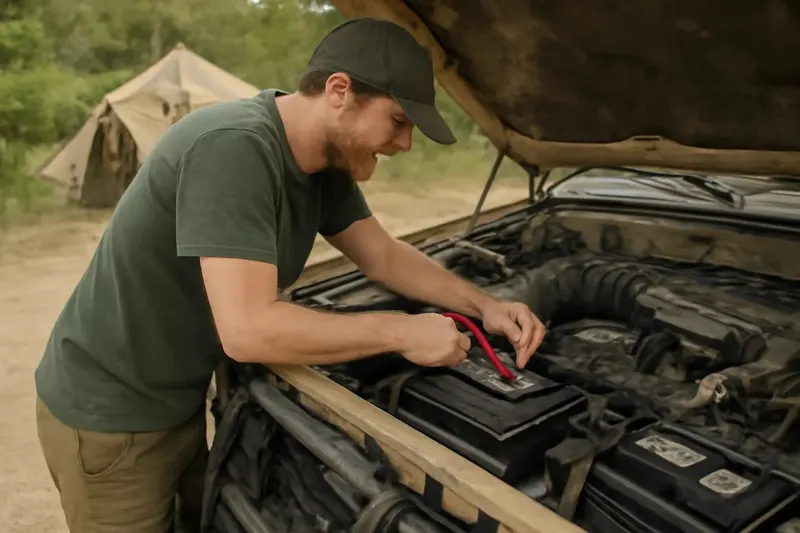
Off-road battery maintenance starts with a simple visual check before the rig ever leaves the driveway. Look for corrosion on the terminals, cracked case plastic, loose hold-downs, and swollen or leaking areas that suggest the battery has been stressed. A battery that shifts on rough ground can wear down fast, so the mounting should be snug without crushing the case.
Give equal attention to the cables and connections, because trail vibration often exposes weak points that look fine at a glance. Check that the clamps are clean, tight, and free of green or white buildup, and trace the cables for rubbed insulation or heat damage near contact points. If you use accessories like lights, compressors, or winches, make sure the added wiring is tidy and secured so it does not pull on the battery posts during washboard miles.
A quick inspection also helps you spot problems that may appear only after repeated off-road use. Slow cranking, dim accessories at idle, or intermittent power can point to a connection issue before the battery itself is blamed. Cleaning and tightening the basic hardware often restores dependable starting and prevents a small annoyance from becoming a trip-ending no-start.
For many owners, this first step is the most valuable because it is fast, low-cost, and easy to repeat. Build the habit of checking the battery whenever you open the hood for fluids or tire pressure, and especially before a long trail day. That routine keeps off-road battery maintenance simple and makes it easier to notice changes early.
Keep Charges Healthy
A battery that sits partially discharged is more likely to struggle on the next outing, especially after cold starts or accessory-heavy use. If the vehicle is stored between trips, use a quality maintainer designed for the battery type so the charge stays in a healthy range without overworking the system. This is especially useful for weekend rigs that see short drives but long gaps between trail runs.
Charging habits matter even when the vehicle is used regularly. Short trips may not fully recover the energy used by winches, cooling fans, cabin fans, or repeated starts on difficult terrain, so the battery can slowly fall behind. If the rig spends a lot of time idling with accessories on, take note of how quickly it rebounds after the engine is off, because a weak battery often shows itself in that recovery period.
Keep the charging system part of the conversation, too, because battery problems are not always battery problems alone. A healthy alternator and clean charging connections help the battery reach and hold an appropriate state of charge. If the battery seems to go flat too quickly even after a proper charge, the issue may be repeated accessory use, a parasitic draw, or a charging fault rather than simple age.
The goal is consistency, not constant tinkering. For off-road battery maintenance, a stable charge reduces stress and gives you a better margin when the trail gets cold, rough, or equipment-heavy. The more demanding the build, the more important it becomes to start each trip with a battery that is fully ready instead of merely “good enough.”
Match Use to Battery Type
Not all batteries tolerate off-road life in the same way, so it helps to know what kind of battery is installed and how it likes to be used. A standard starting battery is built mainly for cranking power, while AGM and other sealed designs are often chosen because they handle vibration and accessory use better. Whatever the type, follow the charging and maintenance guidance that comes with the battery rather than treating every battery the same.
Deep cycling, heavy accessory loads, and frequent short starts can shorten service life if the battery is not suited to those demands. Off-road rigs that power refrigerators, auxiliary lighting, radios, or air compressors may need a setup that can handle repeated discharge and recharge cycles more gracefully. If your setup regularly pushes the electrical system, battery choice becomes part of the maintenance plan, not just a replacement decision later.
Temperature also changes how a battery behaves, and trail users often feel that difference in the real world. Cold weather makes cranking harder and can reveal a battery that seemed fine in mild conditions, while heat can accelerate wear over time. When you know how your battery type responds, you can avoid misreading normal behavior as failure or overlooking real decline.
Off-road battery maintenance works best when it is matched to the way the vehicle is actually used. A light trail rig, a daily-driven 4x4, and a gear-heavy overlander place different demands on the same electrical parts. Understanding that difference helps you choose upkeep steps that support reliability instead of relying on one-size-fits-all advice.
Browse our recommended gear
Our featured picks refresh periodically. While we update them, our editorial guides can help you find the right gear for your rig.
See our guidesManage Vibration and Mounting
Rough terrain is hard on electrical systems because vibration affects more than just the battery case. A battery that is not held firmly can bounce, flex its cables, and wear on nearby components, especially on corrugated roads and repeated impacts. The hold-down should keep the battery secure enough that it cannot shift, but not so tight that it distorts the housing.
Check the tray and surrounding hardware for rust, bent brackets, or missing pieces that could allow movement. If the vehicle sees serious trail time, it is worth looking at the rubber pads, brackets, and clamps as part of normal prep. Small wear items in the mounting setup can be the difference between a battery that stays dependable and one that gets shaken loose over time.
Cable routing matters for the same reason. Leads should have enough slack to accommodate engine movement without rubbing against sharp edges, hot surfaces, or moving parts, and any added power leads should be supported independently. When wires are left to flop around, the battery often bears the consequence through loosened terminals or damaged insulation.
This is one of the most overlooked parts of off-road battery maintenance because it is easy to focus on capacity and ignore hardware. Yet the battery cannot do its job well if the environment around it is abusive. A solid mount and clean cable layout protect both reliability and safety on rough ground.
Watch for Parasitic Draw
Some off-road vehicles lose charge while parked because a small electrical drain continues even when the key is off. Aftermarket alarms, radios, lights, switches, and charging ports can all contribute to a parasitic draw if they are wired poorly or left active by mistake. If the battery keeps going low between trips, it is worth considering whether the vehicle is using power when it should not be.
Clues are often simple: a battery that is fine after a drive but weak after a day or two of sitting, or accessories that seem to behave differently than expected when the engine is off. Start by confirming that everything is switched off and that no accessory is staying awake longer than it should. In a build with multiple add-ons, orderly wiring and clear labeling make troubleshooting much easier.
Sometimes the issue is not a major fault but a small convenience item that quietly drains power over time. USB chargers, light bars, inverter setups, and other trail electronics can add up if they are not isolated correctly. Paying attention to those loads helps you preserve starting power for the times it matters most.
For off-road battery maintenance, this is a practical checkpoint rather than a deep electrical project. You do not need to chase every possible cause at once; you only need to notice patterns and eliminate obvious drains. That habit keeps the battery from being blamed for a problem created elsewhere in the system.
Build a Simple Routine
The easiest battery care plan is one you can repeat without extra gear or complicated steps. Before a trip, look at the terminals, confirm the battery is secure, and check that the vehicle starts briskly with normal dash behavior. After the trip, give it another quick look for loose hardware, fresh corrosion, or cable wear caused by the day’s terrain.
Seasonal changes are a good reminder to slow down and inspect the electrical system a little more carefully. Before winter or after a long storage period, verify the charge state, clean the contacts if needed, and make sure the battery is not aging into a weak-start pattern. If the rig is used hard in summer, check more often for heat-related wear, especially around hot engine compartments and accessory wiring.
A simple log can help without turning maintenance into a chore. Note when the battery was charged, when it was cleaned, and whether any slow-crank symptoms appeared after a trip. Those small observations make it easier to spot a trend before it becomes a no-start in the middle of a trail weekend.
The value of a routine is that it lowers uncertainty. Off-road battery maintenance does not require constant intervention, but it does reward steady attention and a clean, practical checklist. If the battery, cables, mount, and charging habits are all in good shape, the rest of the vehicle’s trail prep becomes more dependable too.