Start With a Simple Load Plan
Good off-road cargo organization starts with deciding what needs to be reachable on the trail and what can stay buried until camp. Split gear into daily-use items, recovery essentials, food and water, tools, and extras. That simple sorting step keeps you from packing by habit and helps reduce the pile of loose items that slide around once the vehicle is off pavement.
Place the heaviest items low and as close to the vehicle’s center as possible to help preserve balance. Lighter gear can ride higher, but it should still be contained so it does not shift when braking or climbing. A clear load plan also makes it easier to check the vehicle before a trip, because every item has a place and every place has a purpose. For many drivers, the best cargo setup is not the most complicated one, but the one that is repeatable on every outing.
Think about access in layers rather than stuffing everything into the first open space. A first layer might hold emergency items and tools, while a second layer carries food, camp gear, or spare clothing. If you often travel with passengers, assign each person a small area or bag so their items do not spread across the cabin. That approach keeps the interior calmer and helps everyone know where to look when something is needed fast.
It also helps to write down your usual kit after a few trips and adjust it over time. You may find that some gear is always unused while other items are missing when conditions change. The goal is not perfection; it is a reliable system that reduces clutter and saves time at the trailhead. Once the layout feels natural, packing becomes quicker and mistakes become less likely.
Use Modular Containers That Stack Well
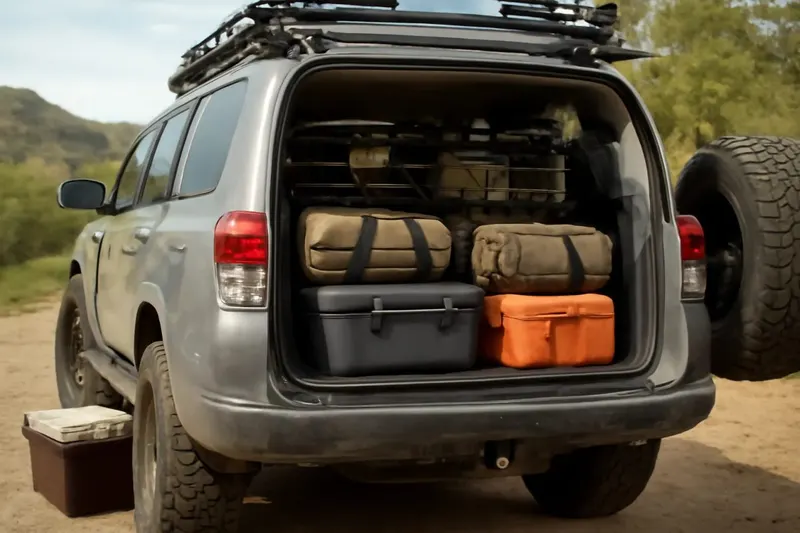
Modular containers are one of the easiest ways to improve off-road cargo organization because they make gear easier to sort and lift. Small bins can hold recovery gloves, straps, and shackles, while medium containers can carry cooking gear, spare fluids, or first-aid supplies. When each category has its own container, you avoid turning the cargo area into one large mixed pile.
Stackable containers are especially helpful when cargo space changes from one trip to the next. If you bring more camp gear one weekend and more tools the next, modular bins let you reconfigure the load without repacking everything from scratch. Clear labels can speed things up, but even simple color coding or tape markings can help. The point is to make it obvious which container holds what, so you are not digging through three bags to find one small tool.
Durability matters because cargo containers take bumps, vibration, and weather exposure. Choose boxes or bags that close securely and hold their shape when loaded, since soft and misshapen containers tend to collapse and create clutter. If you use soft-sided bags, make sure they still have a defined home and do not drift across the floor when the vehicle moves. A good container system should work with your cargo area rather than fighting it.
Modular storage also makes unloading easier at camp or at home. You can remove one category at a time instead of emptying the whole vehicle just to reach a single item. That saves time and reduces the chance of forgetting something during repack. Over time, a consistent bin system becomes a quiet part of the routine, and that kind of predictability is valuable on rough roads.
Secure Gear Against Movement
Loose cargo is one of the biggest frustrations in off-road travel because it shifts, rattles, and steals usable space. Even well-packed gear can become a problem if it is not restrained by straps, nets, dividers, or tie-down points. The aim is not to clamp everything rigidly, but to stop movement that could damage items or make the cabin noisy and distracting.
Use tie-down points whenever the vehicle provides them, and avoid relying on a single strap for a heavy load. A cargo net can help hold lighter items together, while anchored straps can keep bins from sliding in longer cargo areas. If you are carrying awkward shapes such as a jack, tool case, or cooler, surround them with smaller items that help fill gaps and prevent side-to-side travel. Small changes in placement often make a large difference in how secure the load feels.
Think about what could happen if you stop suddenly or angle across rough terrain. Anything unsecured may become a projectile or block access to other gear, which is why containment matters as much as weight distribution. Soft items like jackets or blankets still need a plan because they can obscure tools or get pulled into openings. A tidy cargo area is safer and easier to use when the trail gets rough or the cabin gets crowded.
After the first few miles, check for rubbing, sagging, or shifting if conditions allow. That quick look can reveal weak points before they turn into bigger annoyances. If something consistently moves, change the container, add a divider, or move it to a more stable spot. Good restraint systems are usually simple, but they should be treated as part of the packing process, not an afterthought.
Browse our recommended gear
Our featured picks refresh periodically. While we update them, our editorial guides can help you find the right gear for your rig.
See our guidesKeep Frequent Items Accessible
The most useful cargo setups put high-use items where they can be reached without unloading half the vehicle. Recovery gloves, a flashlight, wipes, snacks, water, and a small tool kit often belong near the back or in a side pocket, depending on the vehicle layout. The idea is to make common tasks quick and reduce the chance of leaving the main cargo area open longer than necessary.
Accessibility also matters for safety gear and basic trail needs. If you need to locate a tire gauge, a tow strap, or a pump adapter in bad weather, you do not want to sort through camp chairs and spare blankets first. Keep those items in a consistent spot and return them there after each use. This is one of the simplest ways to improve off-road cargo organization because it saves time every time the vehicle is loaded.
Not every item should be equally easy to reach, so build a priority order for your storage. Essentials can stay on top or in an outer pocket, while duplicate or backup items can sit deeper in the load. For families or group travel, a small grab bag with common needs can reduce interruptions on the trail. It is easier for everyone when the most likely requests have a clear answer.
Good access should still respect containment. An item that is easy to grab but easy to lose in a pile is only partially organized. Look for solutions that keep items visible, secure, and separated enough to avoid clutter. A practical layout helps the vehicle feel prepared without becoming busy or overcomplicated.
Make Use of Vertical and Hidden Space
Off-road vehicles rarely offer unlimited room, so smart storage often depends on using overlooked areas. Seat-back organizers, door pockets, side compartments, and under-floor spaces can hold flat or small items that would otherwise crowd the cargo floor. These spaces are especially helpful for paper maps, chargers, work gloves, snacks, and soft gear that does not need a large container.
Vertical storage can be useful too, as long as it does not block visibility or make the cabin feel cramped. Hanging organizers and slim pouches can keep small gear grouped together while leaving the floor open for larger items. The key is restraint: too many hanging pockets can become clutter of a different kind. A few well-chosen storage zones usually work better than filling every surface with accessories.
Hidden compartments are best used for items you carry often but do not need to access constantly. Spare fuses, registration documents, emergency cash, or backup cables can live in places that stay out of the way yet remain easy to find when needed. Make sure these locations are still part of your routine, because forgotten storage is no better than no storage at all. A hidden space only helps if you remember what belongs there.
When you use vertical or hidden areas, keep an eye on how they affect passenger comfort and visibility. Cargo solutions should support the drive, not make the cabin harder to use. If a pocket or pouch gets in the way, simplify the setup and free up space again. The best storage ideas tend to be the ones you barely notice until they save you a search.
Maintain and Reset the System After Every Trip
A strong cargo setup is only useful if it stays organized between trips. Build a short reset routine that includes cleaning out trash, restocking consumables, and returning tools to their assigned spots. This keeps small problems from growing into a messy pile that takes extra time to sort before the next outing.
It also helps to inspect bags, bins, and straps for wear after rough use. Zippers, buckles, and attachment points can loosen over time, especially when gear is handled frequently. Replacing a worn organizer before it fails is usually simpler than dealing with a spill or a broken closure on the trail. Maintenance does not need to be elaborate; it just needs to be consistent.
Seasonal changes are a good reason to reassess cargo organization. Summer trips may call for more water and sun protection, while colder weather can shift attention toward blankets, traction aids, and extra layers. If your kit changes with the season, review whether the current storage layout still makes sense. A system that adapts will stay useful longer than one packed around a single type of trip.
The final step is to keep the organization easy enough to repeat. If a method takes too long, it usually gets ignored, and clutter returns quickly. Choose a setup you can reload without frustration, then refine it as you learn what you actually use. That steady process is the real payoff of off-road cargo organization: less scrambling, better access, and a vehicle that feels ready before the trail even begins.