What Onboard and Portable Air Systems Do
When comparing onboard vs portable air systems, the main difference is how the air source lives with the vehicle. An onboard setup is mounted in the vehicle and ready whenever you are, while a portable system is carried in the cargo area and brought out when needed. Both are used to air up tires after off-road travel, and both can support other low-pressure tasks depending on the equipment and fittings.
For many trail drivers, air management is not a luxury but part of basic trip prep. Dropping tire pressure for traction and then restoring road pressure before heading home is a common rhythm, especially on mixed-surface outings. That is why the choice between onboard and portable often comes down to convenience, space, and how often you expect to use the system.
Neither option is automatically better in every case, because the right answer depends on how you drive and what your vehicle can comfortably carry. A weekend camper who airs down a few times a month may value speed and easy access, while someone who wants a simpler setup may prefer gear that stays loose in the cargo area. Thinking about the whole use pattern helps keep the decision practical rather than theoretical.
It also helps to separate air delivery from everything else around it. Hose length, power source, storage, and heat management can matter as much as raw output. Once those details are compared side by side, the strengths of each system become easier to see.
Why Onboard Air Appeals to Frequent Users
Onboard air systems usually appeal to drivers who want an always-ready solution. Because the compressor is installed in or on the vehicle, there is less setup at the trailhead and less chance of leaving a critical piece of gear at home. That convenience is especially useful if you air up and down often, travel with multiple vehicles, or want a cleaner routine after a long trail day.
Another advantage is integration. An installed system can be paired with dedicated switches, gauges, and hose points that make the process feel organized. The more the vehicle is used for off-road trips, camping, or overlanding-style travel, the more a permanent setup can feel like part of the vehicle rather than an extra accessory.
Space and installation are the tradeoffs. Onboard systems can take up room in the engine bay, under a seat, or in the cargo area depending on the design, and they may require more planning for mounting, wiring, and hose routing. That is not a drawback for every owner, but it does mean the system becomes part of the vehicle build, not just a tool you buy and toss in the back.
Heat, duty cycle, and access matter too. A well-matched onboard compressor can be very convenient, but it still needs to be used within its intended limits. For a buyer who values repetition and speed, the onboard route can make the most sense when the vehicle has the space and electrical support to handle it.
Where Portable Air Systems Win
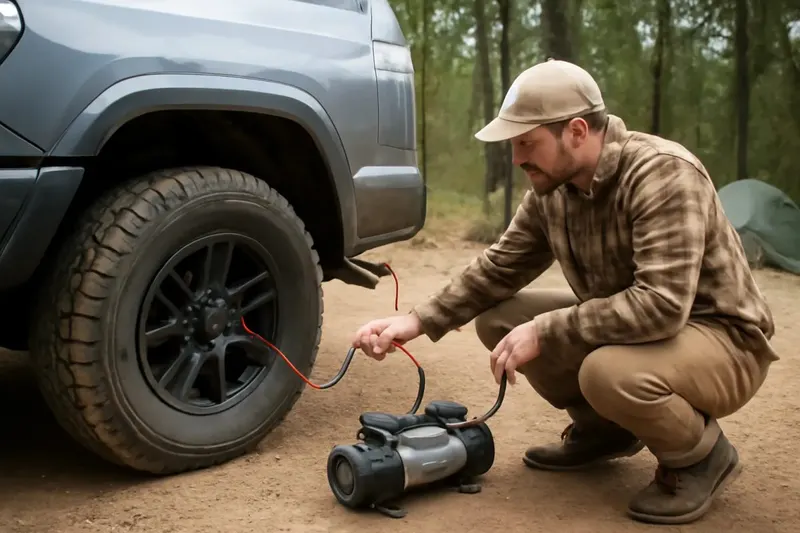
Portable air systems usually win on flexibility. You can move them between vehicles, store them when not needed, and avoid committing to a permanent install. For households with more than one off-road vehicle, that can be a major advantage because a single compressor kit may serve multiple trips without tying up space in one rig.
They also make sense for drivers who want a lower-commitment purchase. A portable unit can be packed with the rest of the trail kit, pulled out only when needed, and replaced or upgraded later without reworking the vehicle. That simplicity often appeals to new off-road owners who are still learning what they use most and what they can leave behind.
The downside is that portability introduces a little more handling. You need to store it securely, make sure the power lead or air hose reaches where you need it, and remember to set it up before airing up. For some drivers that extra step is minor, but for others it becomes noticeable after repeated use, especially when everyone is ready to leave and you are still gathering gear.
Portable systems can also be easier to pair with borrowed, rented, or temporary vehicles as long as the power and connection needs are met. That makes them a practical bridge solution when you want air support without building a dedicated vehicle-mounted setup. In the onboard vs portable air systems comparison, portability usually shines when versatility matters more than speed of deployment.
Browse our recommended gear
Our featured picks refresh periodically. While we update them, our editorial guides can help you find the right gear for your rig.
See our guidesPower Output and Recovery Time
Air delivery speed is one of the most noticeable differences in the onboard vs portable air systems discussion. Some onboard compressors are designed to stay mounted and work efficiently for repeated tire fills, while many portable kits are built around convenience and compact storage. In real use, the actual pace depends on compressor size, hose setup, vehicle power, and how hot the unit gets during extended use.
That means it is better to think in terms of job fit than raw numbers alone. If you air up several large tires regularly, faster recovery time and better sustained output may matter more than a compact footprint. If you only need occasional fills, a slower but simpler portable unit may still be perfectly reasonable and easier to live with.
Another factor is how the compressor handles continuous use. More robust onboard systems may be suited to longer sessions, while smaller portable options may benefit from pauses to cool down. Responsible use matters here, because pushing any air system beyond its intended pace can shorten its useful life and make the process less reliable when you need it most.
Hose length and gauge visibility also affect the experience. A well-planned onboard setup can make pressure checks and fill-ups smoother, while a portable system may need a little more repositioning to reach all four tires comfortably. For many buyers, that is the real decision point: not whether air can be supplied, but how easily it can be supplied during a normal trail routine.
Installation, Storage, and Everyday Convenience
Installation is where onboard systems ask for more upfront effort. Depending on the design, you may need to think about mounting locations, electrical connections, hose paths, and how the system will be protected from dirt, water, and vibration. That extra planning can pay off later, but it also means the purchase is more involved than simply buying a box and putting it in the vehicle.
Portable systems reverse that equation. They usually ask for less setup time but more storage discipline, since the compressor, hose, and accessories need a home that keeps them organized and easy to grab. If the gear is buried under recovery tools, coolers, and camping bins, the convenience advantage starts to shrink because setup becomes a scavenger hunt.
Everyday convenience also depends on how often you travel with a full cargo area. An onboard system keeps the main space open, which can matter on family trips or longer weekends when every cubic inch counts. On the other hand, a portable unit can be stored only when needed, which may suit drivers who do not want permanent equipment taking up room between trips.
For first-time buyers, this can be the most important lens. The best choice is not just the one that moves air, but the one you will actually use consistently. If a system is easy to reach, easy to power, and easy to put away, it is more likely to be part of your routine instead of a piece of gear that stays in the garage.
How to Choose Between Onboard and Portable
Choosing between onboard vs portable air systems starts with frequency. If you air up and down often, drive multiple off-road trips each month, or want the fastest routine after the trail, onboard may fit your habits better. If your outings are occasional or your vehicle changes often, portable may deliver the right balance of function and flexibility.
Vehicle layout matters just as much. Some rigs have obvious places for a mounted compressor, while others do not offer a clean install without sacrificing storage or adding complexity. In those cases, a portable unit can avoid turning a straightforward tool purchase into a vehicle project, which is helpful if your goal is simple trail readiness rather than a full build.
It is also smart to consider who uses the vehicle. A single dedicated off-road rig may justify a permanent solution, while a shared family vehicle may benefit from gear that can be removed when space is needed. That way, the air system supports the trip instead of dictating how the vehicle must be packed.
Finally, think about your maintenance style. Onboard systems reward a little planning and periodic attention, while portable systems reward tidy storage and quick deployment. The best choice is the one that matches your actual habits, not the one that sounds most advanced on paper.