What Tire Puncture Readiness Means
Tire puncture readiness starts before the trail, not after a sharp rock or nail has already done damage. It means building habits and carrying tools that help you spot weak points, reduce avoidable damage, and respond calmly if a tire loses air. For off-road drivers, that preparation matters because traction surfaces are unpredictable and debris is part of the environment.
The goal is not to make a tire indestructible. The goal is to improve the odds that a small puncture stays manageable and that you can finish a route without turning a minor problem into a bigger one. That usually starts with knowing your tires, understanding how you use them, and keeping a simple inspection routine.
Different off-road tires handle impacts differently, but no tread pattern can guarantee puncture resistance. Sidewall cuts, sharp stone hits, and embedded objects can affect any tire, especially when pressure is too low for the terrain or the load. Tire puncture readiness is really about matching equipment and habits to the kind of places you drive.
Because off-road travel can change quickly, readiness also includes judgment. If a tire shows damage before the trip, it may be better to address it early than to assume it will survive the day. Calm preparation gives you options, and options are often what keep a trail day from becoming a stranded day.
Inspection Habits Before You Drive
A careful pre-drive inspection is one of the simplest ways to improve tire puncture readiness. Look for cuts, punctures, bulges, embedded screws or stones, and uneven wear across the tread and sidewall. Pay attention to anything that looks new or deeper than normal surface scuffing, because small damage can become a leak once the tire flexes under load.
It also helps to check valve stems, bead areas, and the spare tire if you carry one. A tire can lose air from places that are easy to overlook, especially after long storage or repeated washboard use. If you use a pressure gauge regularly, you are more likely to notice a slow leak before it becomes a larger issue on the trail.
Rotation and pressure checks should be paired with a visual habit, not treated as separate chores. A tire that is low, unevenly worn, or carrying visible damage deserves a closer look before the next trip. This is especially true when you have recently driven on gravel, through brush, or across rocky approaches that can nick the tread.
Many off-road drivers also keep a simple notebook or phone note with tire pressures and dates. That kind of record is useful because changes are easier to spot when you know what normal looked like last week or last month. Consistency is valuable here, since tire puncture readiness depends on noticing small changes before they become trail problems.
Pressure and Terrain Matter
Correct inflation is a major part of tire puncture readiness because pressure affects how a tire flexes when it hits an obstacle. Too much pressure can make the tire harsh and less able to absorb sharp impacts, while too little can increase sidewall movement and rim risk. The right setting depends on the tire, load, and terrain, so there is no single number that works for every driver.
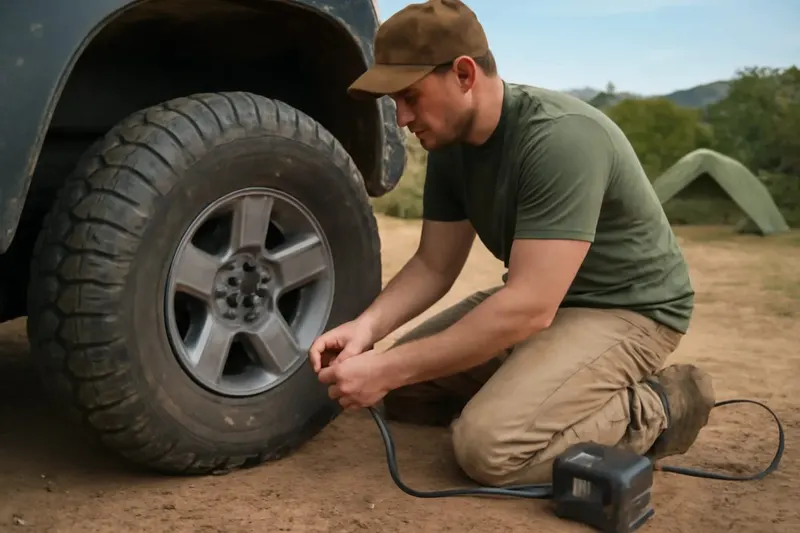
That said, off-road pressure changes should be deliberate and reversible. If you air down for traction, do it with a plan to air back up when the terrain changes, and check that all tires are returned to an appropriate road setting before highway speeds. A portable compressor and a reliable gauge are useful because they let you make those changes with control instead of guesswork.
Terrain also changes what kind of puncture risk matters most. Sharp rock gardens, desert wash sections, old fence wire, and thorny brush each threaten tires differently. When you know the hazard, you can choose a pressure and pace that reduce unnecessary stress on the tire carcass.
The most useful habit is to treat pressure as part of the route plan, not an afterthought. That means checking temperatures, load, and distance before you decide how low to go. Tire puncture readiness improves when the tire is supported well enough to flex, but not so soft that it is working harder than necessary.
Browse our recommended gear
Our featured picks refresh periodically. While we update them, our editorial guides can help you find the right gear for your rig.
See our guidesTools That Help on the Trail
The best tool kit for tire puncture readiness is usually simple and easy to reach. A quality gauge, valve-core tool, plug kit suited to your tire type, pliers, gloves, and a compact air source cover many common roadside or trail-side issues. A flashlight or headlamp also helps when damage appears after sunset or under a vehicle.
Keep the tools organized so they are usable under stress. If a puncture happens in dust, heat, or cold, you do not want to dig through a loose bag looking for a small repair item. A compact case or labeled pouch makes the kit faster to use and less likely to get incomplete over time.
It is also smart to carry items that support inspection, not just repair. A spray bottle with soapy water can help identify leaks, and a tire tread depth gauge can tell you whether wear is contributing to the problem. If you run heavy loads or long distances, a spare valve core and cap are cheap additions that can save time.
The point is not to pack every possible solution. It is to have enough to handle likely situations without improvising beyond your skill. Tire puncture readiness gets stronger when the kit matches your own maintenance habits and the kind of terrain you actually drive.
How to Respond to a Suspected Puncture
If you suspect a puncture, slow down and assess the tire before the problem worsens. Look for steering changes, vibration, or a pull to one side, and stop in a safe place where you can inspect the tire without adding risk. A small leak can sometimes be managed, but continuing at speed can damage the sidewall or wheel.
Once stopped, inspect all four tires, not just the one that looks low. Off-road conditions can leave multiple hazards in play, and a slow leak may be easier to confirm with a gauge than with a visual glance. If the tire is holding enough air to move carefully, go only as far as needed to a stable place for a proper check.
Use the repair items you actually know how to use. A plug kit may be appropriate for certain tread punctures, while other damage may call for a spare tire or a different solution. If the puncture is in the sidewall, near the shoulder, or accompanied by a bulge, the safest choice may be to stop driving on that tire.
Calm decision-making is part of puncture readiness. The right response is not always the fastest one, but it should always be the one that protects the tire, the wheel, and the people in the vehicle. Knowing your limits before the trip makes that decision much easier in the moment.
Building a Simple Readiness Routine
A practical routine keeps tire puncture readiness from becoming a last-minute scramble. Before each trip, inspect the tires, verify pressure, confirm the spare is usable, and check that your repair kit is complete. After the trip, look again for cuts, new wear, or pressure loss that might not have been obvious on the trail.
Seasonal changes matter too, especially if your off-road use shifts between hot desert travel, wet forest routes, or rocky climbs. Temperature and load affect how a tire behaves, so a pressure routine that worked in one season may need a small adjustment in another. Keeping notes helps you make those changes thoughtfully instead of guessing.
It also helps to practice the basic steps before you need them in poor weather or fading light. Knowing where your gauge is, how your compressor connects, and how your repair kit is laid out can save time and reduce mistakes. Familiarity is a safety advantage because it lowers stress when the tire problem is real.
For most drivers, the smartest approach is steady and realistic. You do not need a complicated system to be prepared, but you do need a repeatable one. Tire puncture readiness becomes reliable when inspection, pressure management, and trail-side response all work together.