Overview
For beginners, we generally suggest prioritizing reliability, tires, recovery points, and protection before cosmetic upgrades. It's a common trap to spend on appearance-focused modifications early, only to discover the vehicle needed more basic attention first. This guide walks through a sensible order to think about upgrades, while avoiding universal claims -- vehicle requirements differ enough by make, model, and use case that specific recommendations aren't responsible without knowing your exact vehicle.
Before any upgrade, confirm your vehicle is mechanically sound. See our maintenance and safety hub for a pre-trip check framework that applies whether or not you've modified anything yet.
It's worth noting upfront that plenty of capable off-roading happens in stock or lightly modified vehicles. Upgrades can expand what a vehicle is comfortable doing, but they're not a prerequisite for getting started, and it's reasonable to spend a season or two learning your vehicle's stock capability before investing heavily in modifications.
Reliability first
A vehicle that starts reliably, doesn't leak fluids, and has healthy brakes and suspension components matters more on the trail than almost any single upgrade. Addressing deferred maintenance -- worn belts, aging fluids, questionable brakes -- before adding upgrades avoids compounding an existing problem with new stress from off-road use.
This is also the point to address any known issues rather than hoping they resolve on their own. A vehicle with an intermittent electrical fault or a slow fluid leak is a poor candidate for a remote trip, upgraded or not. If you're unsure about your vehicle's condition, a qualified mechanic's inspection before your first serious trip is a reasonable investment.
It's worth treating this as an ongoing baseline rather than a one-time box to check. Off-road driving places more stress on components than typical daily driving, so a vehicle that was reliable for commuting may need closer attention once it starts seeing regular trail use.
Tires and recovery points
Tires are often the highest-impact upgrade available, since they directly affect traction, ride comfort, and puncture resistance across the terrain types you'll actually encounter. Our all-terrain vs mud-terrain guide covers how to think through that choice based on your typical driving mix.
Rated recovery points are a second early priority, since they're inexpensive relative to their usefulness and directly support safer recovery planning. If your vehicle doesn't have factory-rated recovery points suited to the kind of recovery equipment you plan to carry, this is worth addressing before more elaborate upgrades. See our recovery gear hub for how recovery points fit into a broader recovery plan.
Together, tires and recovery points tend to offer the best combination of low cost and high practical value for a beginner, which is part of why we suggest treating them as an early priority ahead of more expensive, appearance-driven upgrades.
Browse our recommended gear
Our featured picks refresh periodically. While we update them, our editorial guides can help you find the right gear for your rig.
See our guidesProtection upgrades
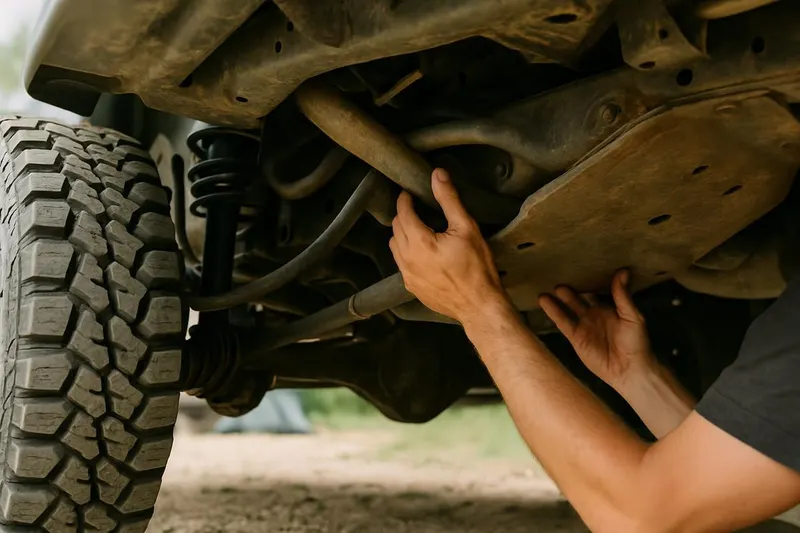
Underbody protection -- skid plates and similar guards for vulnerable components like the oil pan, transfer case, and fuel tank -- reduces the consequence of contact with rocks or uneven terrain. Rock sliders serve a similar protective role for the vehicle's rocker panels on tighter trails.
These upgrades don't prevent every possible impact, and none of them make contact with obstacles risk-free -- careful driving and spotting still matter more than any single piece of protective equipment. But for drivers who expect to encounter rougher terrain regularly, protection upgrades are a reasonable next step after tires and recovery points.
Suspension and storage, later
Suspension upgrades can improve capability and ride quality on rougher terrain, but they're a more involved and often more expensive category than tires or protection, and poorly matched suspension components can create handling or reliability issues. This is generally a later-stage upgrade, best approached once you have a clear sense of the terrain you actually drive and, ideally, with guidance suited to your specific vehicle.
Storage solutions -- drawers, roof racks, or built-in organization systems -- are worth considering once your core gear list is established, since it's easier to design storage around a known set of equipment than to guess in advance. Our off-road gear hub covers general storage and organization ideas.
When to use professional installation
Some upgrades are reasonable for a confident do-it-yourself installer -- many recovery point and light installations, for example -- while others, like suspension work or anything involving structural welding, generally call for a qualified professional's involvement. Incorrectly installed components can create handling problems or safety issues that outweigh whatever benefit the upgrade was meant to provide.
If you're unsure whether an installation is within your skill level, it's worth asking a shop that specializes in off-road upgrades rather than assuming a general guide is enough. Many installation guides, including manufacturer instructions, assume a baseline of mechanical familiarity that not every reader has, and it's better to recognize that gap before starting a job than partway through it.
Keep documentation of any professional installation, including torque specifications and any parts replaced, since it's useful reference material for future maintenance or if an issue develops later.
Sequencing upgrades on a budget
Few beginners can afford every upgrade at once, which makes sequencing important. A reasonable approach is to address deferred maintenance and tires first, since both affect every trip regardless of terrain. Recovery points come next, given their relatively low cost and outsized usefulness for recovery planning.
From there, prioritize based on the terrain you actually drive rather than what looks appealing in photos. A driver who mostly encounters rocky terrain benefits more from underbody protection sooner; a driver focused on longer overland routes might prioritize storage and auxiliary power instead. There's no universal order beyond the general reliability-first principle -- match your specific sequence to your specific trips.
Browse our recommended gear
Our featured picks refresh periodically. While we update them, our editorial guides can help you find the right gear for your rig.
See our guidesAvoiding overload
Every upgrade and every piece of gear adds weight, and vehicles have a rated payload capacity that includes passengers, cargo, and aftermarket additions combined. Adding a heavy bumper, a rooftop tent, drawers, and a full recovery kit can push a vehicle's real-world weight higher than expected, affecting handling, braking distance, and component wear.
Before a significant round of upgrades, it's worth understanding your vehicle's payload rating and roughly tallying the added weight of your planned changes. This is a detail that's easy to overlook when upgrades happen gradually over time, one purchase at a time.
Resale and warranty considerations
Some upgrades can affect your vehicle's factory warranty coverage for related components, so it's worth understanding your manufacturer's position before making significant modifications, particularly to drivetrain or suspension systems. Keep documentation of any upgrades and their installation for future reference, including for a mechanic unfamiliar with the vehicle's history.
Upgrades can also affect resale value in either direction depending on the buyer -- some shoppers specifically seek out an already-upgraded off-road vehicle, while others prefer a stock vehicle they can modify themselves. If resale value matters to you, keep original parts when practical and consider how reversible a given upgrade is before committing to it.
Final thoughts
A sensible beginner upgrade path starts with reliability and maintenance, moves to tires and recovery points, then protection, and treats suspension and storage as later-stage additions once your needs are clearer. Confirm fitment and load limits for your specific vehicle at every step, since requirements vary enough by make and model that general upgrade advice can't substitute for your owner's manual and a qualified installer's guidance.
See our all-terrain vs mud-terrain tires guide for more on the tire decision specifically, and our recovery gear hub for how recovery points connect to a broader recovery plan.