What a Winch Damper Is
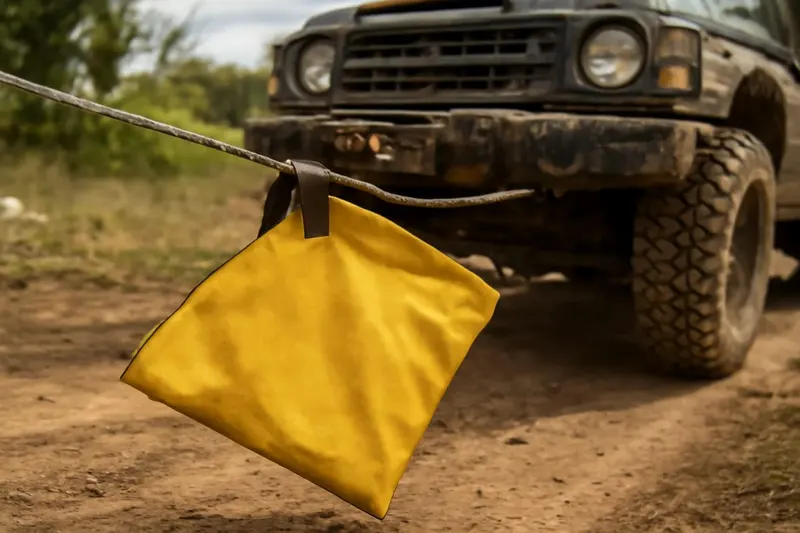
A winch damper is a weighted cover placed over a winch line during recovery. The idea is simple: if the line snaps or unloads suddenly, the damper helps absorb some of the energy and keep the line from whipping as violently. In a winch damper explained context, it is best understood as a passive safety layer rather than a fix for poor technique or bad equipment.
Most damper designs are straightforward and easy to store with other trail gear. Some are shaped like a blanket or pouch, while others use pockets that can be filled with small weight. Either way, the purpose is the same: add mass to the line so a failure is less likely to turn into a fast, unpredictable lash. That extra step matters because winch lines carry significant stored energy when they are under load.
A damper is not unique to one type of vehicle or one style of recovery. It can be used with many off-road setups when the operator wants a more cautious approach to winching. Think of it as part of a broader recovery mindset that includes inspection, attachment discipline, and controlled pulls. It does not make a sketchy recovery safe, but it does add a margin that many trail users appreciate.
For beginners, the key takeaway is that a damper is not a decorative accessory. It is a practical tool meant to be deployed before tension is applied to the line. For experienced drivers, it is one more item that supports consistent habits on remote roads, muddy climbs, and hard-packed trails where a winch may become necessary. The winch damper explained in plain terms is simply this: a modest piece of gear intended to reduce risk when a line is loaded.
Why Off-Roaders Use a Winch Damper
Off-roaders use a winch damper because a loaded winch line can release energy quickly if something goes wrong. Even when gear is rated appropriately, the line, hook, and anchor points are still operating under stress. A damper helps change how that energy behaves by adding weight to the line and encouraging it to fall rather than snap back with full force.
That benefit matters most in practical trail situations where conditions are messy and control is important. Mud, snow, steep angles, and uneven ground can all make a recovery feel less predictable than it looks on paper. A damper is one of several habits that show a careful operator is thinking beyond the immediate pull. It also signals to passengers and bystanders that the recovery is being handled with deliberate caution.
Another reason people carry one is simplicity. A damper does not require power, calibration, or complex setup. If the vehicle already has a winch, the damper becomes an easy add-on that can be deployed quickly before the line is tensioned. That makes it appealing for trail kits built around low-stress, repeatable preparation rather than improvisation.
It is also worth noting what a damper is not meant to do. It does not replace proper rigging, secure anchors, or common-sense spacing. It should not be treated as permission to stand too close to a loaded line or ignore line inspection. In the broader safety picture, the damper supports good judgment, but judgment still has to lead. For many drivers, that is why the winch damper explained idea remains so practical: it is easy to use, easy to pack, and helpful when the stakes of a pull are high.
How It Helps Reduce Line Whip
The main function of a winch damper is to reduce the speed and severity of line whip if a failure occurs. When a steel cable or synthetic rope is under tension, it stores energy much like a stretched band. If that line parts or a connection fails, the line can recoil sharply, and the damper’s weight changes that motion by making the line drop sooner and move with less violent snap.
This does not mean the damper stops every dangerous movement. It is better viewed as a mitigation tool that may reduce the chance of a line becoming a fast, airborne hazard. The amount of protection depends on many factors, including how much tension is in the system, where the damper is placed, and whether the recovery setup itself is sound. In other words, the damper helps most when everything else is already being handled properly.
Placement matters because the damper needs to sit on the active span of the line, not tucked away in a corner of the vehicle. If it is thrown too close to the winch drum or left off to the side, it cannot do much when the line is loaded. Many users center it along the line so the weight has the best chance of influencing the cable or rope if a failure occurs.
For trail users, the value of this setup is confidence built on procedure, not bravado. It creates a visible pause before the pull begins, which encourages a more thoughtful check of anchors, shackles, and line condition. That pause is useful because small mistakes often happen when people rush. The winch damper explained in technical but approachable terms is simply that it changes the consequences of a line failure by forcing the line downward rather than letting it whip freely.
Browse our recommended gear
Our featured picks refresh periodically. While we update them, our editorial guides can help you find the right gear for your rig.
See our guidesWhen to Deploy a Damper
A winch damper should be deployed before any serious load is applied to the line. That includes the moment after the line is routed and the anchor is set, but before the recovery begins in earnest. If you wait until the line is already under tension, you have missed the chance to use it as intended.
Many drivers treat it as part of the same pre-pull routine as checking the hook, confirming the anchor, and clearing the area around the recovery zone. It fits well into a calm, methodical process because it takes only a moment to position. The goal is not to create a ritual for its own sake; the goal is to avoid skipping a simple safety step when the situation is getting tense.
There are also cases where a damper is especially sensible, such as longer pulls, uncertain terrain, or situations involving heavier vehicle loads. A line under more stress generally deserves more respect, even if the exact risk is hard to measure in the field. That is why many off-road kits include a damper alongside straps, soft shackles, and gloves. Each item serves a different purpose, and the damper’s role is tied specifically to the behavior of a loaded winch line.
Beginners sometimes wonder whether a damper is necessary every single time the winch is used. The practical answer is that it is most valuable whenever a pull involves real tension and people are near the recovery area. If a winch is only being spooled in under no load, the need is different. But when the line is doing actual work, the damper becomes part of a conservative, trail-smart approach that keeps the recovery organized.
What It Does Not Replace
A winch damper is helpful, but it is not a substitute for sound recovery basics. The line still needs to be in good condition, the anchor still needs to be secure, and the pull still needs to be controlled. If those fundamentals are weak, the damper cannot make up for the gap. It only addresses one part of the risk picture: what happens if the line fails or unloads suddenly.
That is why experienced trail users often think of the damper as one item in a layered setup. It works alongside line inspection, correct attachment, cautious communication, and smart spacing around the vehicle. Each layer helps, but none should be used as an excuse to relax attention. In a recovery, the most useful habits are usually the boring ones repeated consistently.
It is also important not to confuse a damper with a rescue plan or a guarantee of safety. It does not eliminate the need to stay out of the line of pull or to keep bystanders positioned well away from the work area. Nor does it excuse unnecessary strain on the winch system. The best use of the damper is as a supporting tool for a slow, deliberate mindset that respects the loads involved.
For Amazon shoppers comparing off-road accessories, this distinction helps keep expectations realistic. A damper may be compact and easy to carry, but its value depends on how thoughtfully the rest of the recovery is handled. That makes the winch damper explained conversation less about gear hype and more about discipline. If you remember only one thing, remember that the damper is there to back up good practice, not replace it.
Choosing and Storing One for Trail Use
When choosing a winch damper, the most important factor is whether it is easy to deploy consistently. A product that is awkward to unfold or difficult to place is less likely to be used when the trail gets busy. Look for something that fits neatly with your existing recovery gear and can be carried without taking up too much room in the vehicle.
Material and construction matter because the damper should be durable enough for repeated trail use. You want stitching, pockets, or panels that hold together under regular handling, and a shape that makes it obvious how the damper should sit on the line. Simplicity usually wins here, especially for drivers who prefer gear that is quick to understand under pressure. A cluttered design can slow down a process that ought to be calm and straightforward.
Storage is part of the value too. A damp, muddy, or hard-to-find accessory is less useful than one packed where it can be reached easily with the rest of the recovery kit. Some drivers keep the damper near gloves, shackles, and straps so the whole setup can come out together before a pull. That kind of organization is not flashy, but it supports the kind of disciplined trail preparation that pays off when daylight, weather, or fatigue starts to work against you.
For shoppers comparing options, the best choice is usually the one that encourages use rather than excuses. A well-designed damper should feel obvious, manageable, and ready when the winch comes out. That is the practical side of the winch damper explained topic: not just what it does, but how it fits into the larger habit of preparing an off-road vehicle for real-world recovery work.