What a Tree-Protection Strap Does
A tree-protection strap is a wide, durable strap used to connect recovery gear to a tree without cutting into the bark. In simple tree protection strap basics, the idea is to spread force over a larger surface so the tree is less likely to be damaged. It is not just a stronger version of rope; the width matters because it changes how pressure is applied during a pull.
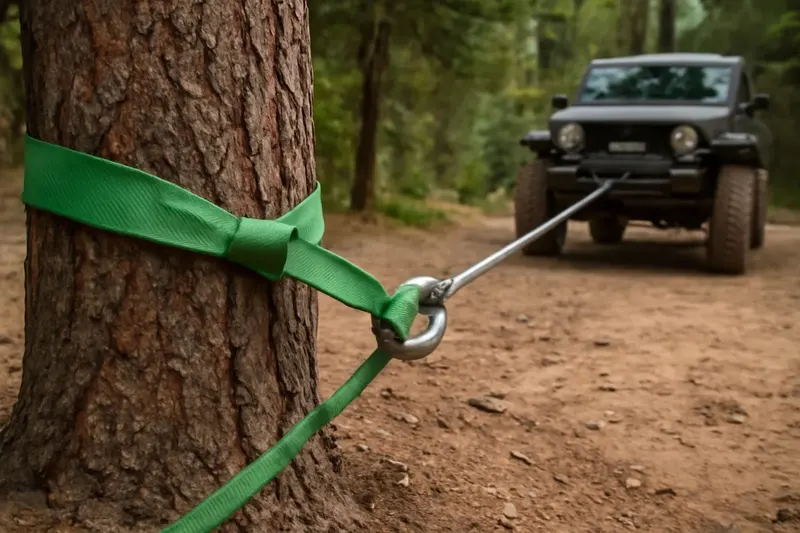
Off-road drivers usually use one when a winch line, pull strap, or recovery setup needs an anchor point in a wooded area. The strap wraps around the trunk and serves as the contact point between the tree and the recovery hardware. That makes it a practical trail tool, but only when used with care and a clear understanding of the load path.
In practice, the strap is meant to protect the tree first and support a controlled recovery second. It helps keep metal hardware from biting directly into bark and can reduce the chance of slipping that happens when hard edges contact a round trunk. For beginners, that makes it easier to see why the strap is a dedicated piece of recovery gear rather than a general-purpose accessory.
It also helps set the tone for the rest of the setup. When the anchor point is chosen thoughtfully and the strap is positioned correctly, the recovery tends to be more orderly and easier to inspect. That is a small detail on paper, but in the field it helps keep the process focused on steady traction instead of improvised fixes.
Why Width and Material Matter
Width is the first thing to notice because a broader strap distributes load more evenly across the tree. Narrow webbing can concentrate force, which increases the chance of bark damage or slipping into the trunk under tension. That is why many off-road recovery setups call for a dedicated tree strap instead of a general-purpose tow strap.
Material quality matters too, since the strap needs to handle tension without excessive stretch, fraying, or heat buildup. Look for heavy-duty webbing that feels substantial in hand and has clean stitching at the ends. The best choice is the one that matches recovery use, not the cheapest strap that happens to be long enough.
It also helps to think about visibility and handling. A strap that is easy to see and easy to position can reduce setup mistakes in low light or muddy conditions. When you are working around a vehicle and anchor point, clear layout matters as much as strength.
Another practical consideration is how the strap behaves when loaded and then released. Webbing that twists easily or hides dirt in the fibers can make inspection harder after a trip, while a strap that lays flat is simpler to check for wear. That does not make one style universally better, but it does make field use smoother when you are assembling gear with gloves on or in changing weather.
Length matters too, because the strap needs enough reach to wrap a suitable anchor without forcing a tight bend or awkward connection. Too short can limit where you can place it; too long can leave extra slack to manage. The useful middle ground is a strap that fits common recovery setups without making the anchor point harder to control.
Where It Fits in Recovery Gear
Tree straps are part of a larger recovery system, not a stand-alone solution. They typically work with shackles, soft shackles, winch lines, or other rated hardware designed for recovery loads. In that setup, the strap gives you a safer contact point while the rest of the gear manages the pull.
It is important to use recovery-specific components together so the system behaves predictably under tension. Mixing random straps, hooks, or hardware can create weak links that are hard to spot before use. A good recovery kit is built with each piece serving a clear role, and the tree strap is the anchor interface when a tree is the right choice.
For beginners, this is one of the most useful tree protection strap basics to remember: the strap is there to protect the tree and help create a stable anchor, not to replace proper rigging. If the rest of the system is not rated or appropriate for recovery, the tree strap cannot make it safe. Keep the entire setup in view, not just the strap itself.
That broader view also helps you avoid overcomplicating the pull. The strap should complement the vehicle’s recovery plan, not become the part that is asked to solve every problem. When the anchor, line, and connection hardware all make sense together, the setup is easier to explain, inspect, and repeat in a controlled way.
It is also useful to keep the strap dedicated to this role instead of borrowing it from cargo or towing tasks. Recovery use exposes webbing to different angles and loads than tie-down work, so having a strap reserved for tree anchors makes inspection more straightforward. That kind of separation keeps your gear organized and reduces confusion when you need to build a setup quickly but carefully.
Browse our recommended gear
Our featured picks refresh periodically. While we update them, our editorial guides can help you find the right gear for your rig.
See our guidesHow to Use One Responsibly
Using a tree-protection strap starts with choosing a healthy anchor that can support recovery forces without obvious damage. Wrap the strap around the trunk at a practical height and keep it flat against the bark rather than twisted or crossed. A flat strap spreads load more evenly and is easier to inspect before tension is applied.
Make sure the strap is seated securely and that the connection hardware is aligned so the pull stays controlled. Avoid sharp angles that can concentrate stress on a small area of bark or on the strap itself. If the setup looks awkward before the pull starts, pause and rework it rather than hoping it will behave under load.
It also helps to keep people clear of the tension zone and follow a deliberate pace during recovery. The strap is only one part of a process that should be steady, planned, and visible to everyone involved. Calm setup habits matter more than speed when the goal is to protect both the vehicle and the trail environment.
Good placement also means thinking about the ground around the tree. Roots, ruts, rocks, and mud can affect how the line angles toward the vehicle, and a poor angle can put extra strain on both the strap and the anchor. If you need to reposition the vehicle or adjust the anchor to reduce side loading, that small delay is usually worth it.
Another responsible habit is to stop and reassess if the tree or the terrain does not look suitable. A tree strap does not make every tree a good anchor, and it should not be used as a shortcut around poor judgment. The safest setups tend to be the ones that feel deliberate before any tension comes on the line.
What to Check Before Each Use
Before trail use, inspect the strap for cuts, glazing, pulled stitching, or fuzzed webbing along the edges. Any visible damage is a reason to set it aside until you have confirmed it is still suitable for recovery use. A strap can look fine from a distance while still having wear that affects how it performs under load.
Check the ends, too, because attachment points often show the first signs of stress. Hardware loops, reinforced eyes, and stitching should all be intact and consistent. If something feels stiff, uneven, or stretched in a way that looks new, treat that as a warning and keep it out of service until you understand the cause.
Cleaning and storage also play a role in keeping the strap ready. Mud, grit, and moisture can shorten the useful life of webbing if they are left to sit after a trip. Dry it, store it out of direct sun, and keep it separate from sharp tools or hot surfaces so it stays ready for the next outing.
A quick pre-trip check can also include the way the strap packs and unfolds. If it has been crushed under heavy gear or stored with knots in it, the webbing may not lay flat when you need it most. Straightening that out before you hit the trail saves time later and makes the strap easier to inspect again after use.
If the strap has been used in a muddy or sandy recovery, take extra time to clean it once you are back home. Fine grit can work into the fibers and make wear harder to spot on the next outing. A clean, dry strap is simpler to trust, and that matters when it is part of an anchor system you expect to hold steady.
Common Mistakes and Smart Habits
One common mistake is treating any strap with a loop as a recovery strap. General tie-down gear is not automatically appropriate for trail recovery, and the wrong webbing can fail or damage the tree more easily. Another mistake is using a strap that is too narrow, too short, or too worn for the load and angle involved.
It is also easy to forget that anchor choice matters as much as strap choice. A tree strap should be used only where a tree is a suitable anchor and where the setup will not create unnecessary harm to the environment. If the tree is small, weak, or poorly positioned, the better move is to reassess the recovery plan rather than force a questionable setup.
Smart habits are simple and repeatable. Keep the strap dedicated to recovery work, inspect it before each trip, and store it so it is easy to grab when needed. Those routines support tree protection strap basics in a practical way: they protect the anchor, reduce errors, and make recovery gear easier to trust when conditions get messy.
Another smart habit is to keep your recovery kit organized so the right strap is easy to identify at a glance. In mixed gear bags, it is easy to grab the wrong webbing if everything looks similar or gets tangled together. Clear storage reduces that risk and helps you stay methodical instead of rushed.
Finally, remember that the cleanest-looking setup is not always the best one. If the angle is poor, the tree is questionable, or the strap is showing wear, the smart move is to slow down and rethink the anchor. Good off-road preparation is often less about having more gear and more about using the right gear in a calm, disciplined way.