Why Skid Plate Considerations Matter
Skid plates are simple in concept but easy to overbuy or underbuy in practice. The right setup can protect vulnerable underbody parts when rocks, ruts, ledges, or debris contact the vehicle. The wrong setup can add weight, complicate maintenance, or still leave key components exposed. That is why skid plate considerations should come before a purchase, not after.
Most drivers do not need to armor every inch underneath the vehicle. What usually matters is protecting the components most likely to be hit on the terrain you actually drive. A well-chosen skid plate spreads impact, helps the vehicle slide over obstacles, and reduces the chance of avoidable damage to important systems.
Think about how you use the vehicle. A weekend trail explorer, a forest-road traveler, and a more technical off-road driver will not need identical protection. Matching coverage to real use is the most reliable way to stay practical, keep weight in check, and avoid turning a useful upgrade into a maintenance burden.
What to Protect First
When shopping for skid plates, start by identifying the lowest and most exposed parts of the underbody. Common priorities include the engine oil pan, transmission, transfer case, fuel tank, steering-related components, and low crossmembers or brackets. On some vehicles, the exhaust path or suspension-related hardware may also deserve attention if they sit unusually low.
A quick inspection from ground level helps. Note what hangs lowest, then ask which parts are both vulnerable and important enough that damage could end a trip or create a major repair. In many cases, protecting one critical drivetrain component is more useful than covering a less exposed area with little practical benefit.
It can help to think in zones. The front zone often takes direct impacts when climbing over obstacles or dropping into ruts. The center zone matters for breakover protection, especially where drivetrain parts sit below the frame. The rear zone may be more important where the fuel tank, links, or exhaust are exposed. You do not need to buy every plate at once, but you do want a plan.
Factory protection is worth checking too. Some vehicles already have light-duty shields, but those are not always intended for repeated rock contact or harder trail use. If you keep factory pieces, make sure they integrate cleanly with aftermarket coverage and do not leave weak gaps between panels.
Material and Thickness
Material choice is one of the biggest skid plate considerations because it affects strength, weight, noise, and how the vehicle feels on and off the trail. Common choices include steel, aluminum, and, in some cases, composite materials. Each has strengths, and none is ideal for every driver.
Steel is often favored for toughness and resistance to deformation under repeated impacts. It can be a strong choice when harder hits are expected or when a very robust feel is the priority. The tradeoff is weight. Extra mass can affect handling, fuel use, and the load placed on mounting points. Steel also needs reasonable corrosion care if coatings are scratched.
Aluminum is popular because it is lighter while still offering meaningful protection. Lower weight can help preserve performance and make installation easier. Aluminum may bend more readily than steel in some impacts, but a well-designed plate can still hold up well on the trail. In practice, the design and thickness matter as much as the raw material.
Thickness should be viewed as part of the whole design, not the only number that matters. A thicker plate is not automatically better if the shape is weak, the mounting is poor, or the edges snag on obstacles. Reinforcement bends, flanges, ribs, and how the plate ties into the vehicle can all matter as much as thickness. The strongest useful choice is usually the one that balances durability with manageable weight.
Coverage and Design
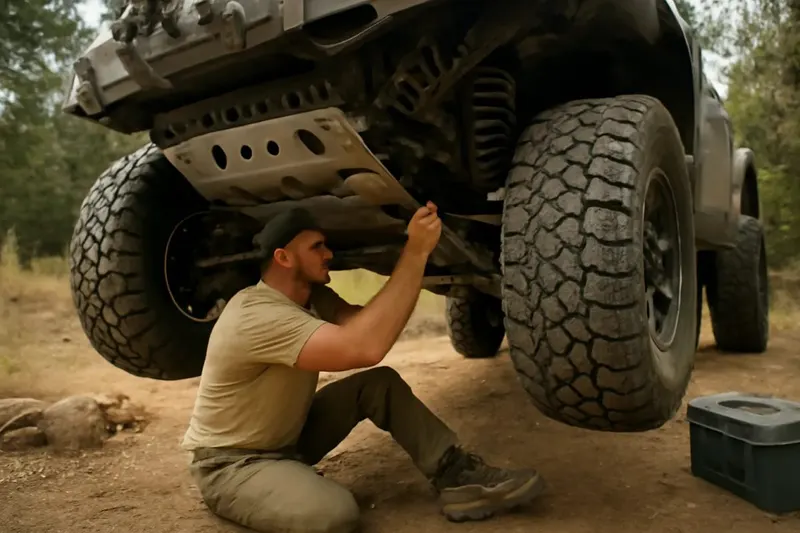
Coverage is where many buyers discover the difference between a basic plate and a smarter system. A skid plate should protect the right areas without leaving awkward gaps that can snag or funnel an impact into an unprotected part. Full underbody armor is not always necessary, but partial coverage should still make sense as a system.
Look closely at the leading edge, the transitions between sections, and where the plate ends. Good designs follow the underbody shape and help the vehicle slide rather than hang up. Smooth edges can reduce the chance of catching on rocks, while properly shaped panels can direct force away from sensitive areas.
Ventilation and heat management also matter. Some components need airflow, and a plate that traps heat around the engine, transmission, or exhaust can create avoidable issues. This is especially relevant in slow technical terrain, hot weather, towing situations, or long low-speed climbs where airflow is limited.
Drainage and access cutouts can be helpful, but they should not weaken the plate more than necessary. The same goes for modular systems. A front plate that mates cleanly with a transmission or transfer case plate often works better than a mix of unrelated pieces that leave weak spots between sections.
Browse our recommended gear
Our featured picks refresh periodically. While we update them, our editorial guides can help you find the right gear for your rig.
See our guidesFitment, Mounting, and Clearance
Fitment is one of the most practical skid plate considerations because even a strong plate is not useful if it does not mount correctly. Good fitment means the plate matches the vehicle underbody, uses appropriate attachment points, and leaves room for suspension travel, steering movement, exhaust routing, and driveline articulation.
Mounting points deserve close review. A skid plate should spread loads into the vehicle structure in a way that suits the design. Weak brackets, awkward fasteners, or poorly placed attachment points can turn protection into a headache. Strong systems usually rely on secure hardware, sensible reinforcement, and multiple points of contact where the vehicle is likely to see force.
Clearance matters just as much. The plate should not sit so close that a small dent causes contact with moving parts, and it should not hang so low that it becomes the first thing to drag. A plate that improves one area but creates a new low point can be counterproductive, especially on vehicles with limited ground clearance.
Suspension and tire changes can also affect fitment. Lifts, altered bump stops, larger tires, and other modifications may change the relationship between the underbody and the trail. If the vehicle has been modified, confirm that the skid plate still works with the current setup instead of assuming direct fitment from factory configuration.
Installation style matters too. Some plates are straightforward bolt-on parts, while others require partial removal of factory components or more involved alignment. If you plan to install at home, review the hardware, access points, and overall complexity before buying so you know what the process will require.
Weight, Noise, and Driving Feel
It is easy to focus only on protection, but a skid plate changes the vehicle in everyday use. Weight is the first effect most buyers notice. Added mass can affect acceleration, braking, steering response, and suspension behavior. For a trail-focused vehicle, that tradeoff may be acceptable. For a daily driver, it may matter more than expected.
Noise is another factor. Some skid plates can resonate, rattle, or amplify vibration if they are not mounted well or if the design allows contact with nearby parts. That does not automatically mean there is a problem, but it is worth checking the design closely and making sure all hardware can be secured properly.
Driving feel can change as well. A heavier plate may make the vehicle feel more planted, but it can also make the vehicle less lively over uneven terrain. Aluminum often helps reduce that effect, while steel may still be worth the compromise when maximum toughness is the priority. The better choice depends on how you balance durability against livability.
If you drive long distances to reach the trail, that balance becomes even more important. A vehicle that remains easy to live with is more likely to be inspected, maintained, and used well. Skid plate considerations should include road manners as well as off-road protection.
Maintenance Access and Cleaning
One of the easiest things to overlook is how often you will need to remove or work around the skid plate. Trail vehicles still need routine service, inspection, and cleaning. Mud, sand, snow, and debris can collect on top of a plate, and that buildup can hide leaks or wear if you never check underneath.
Think about oil changes, drain access, inspection of drivetrain parts, and general underbody checks. If a skid plate makes these tasks awkward, maintenance may get delayed longer than it should. That is not ideal for any vehicle, especially one that sees regular off-road use.
Cleaning access is also practical. Openings that let mud drain out can help, but they should be placed sensibly. A plate that traps grime can become heavier and harder to inspect over time. In cold climates, packed snow and ice can create similar issues. Good design helps, but no plate eliminates the need for periodic cleaning.
Before buying, imagine a routine service visit, a quick inspection after a rocky trip, or a muddy return drive where the underside is coated in debris. If the product seems easy to remove, reattach, and inspect, that is a meaningful advantage. Practicality is part of durability because a skid plate you can maintain is one you are more likely to keep in good condition.
How to Compare Options Confidently
When narrowing down choices, use a simple checklist instead of relying on one feature. Start with coverage: does the plate protect the component or zone you actually need? Then review material, weight, mounting style, service access, and how well the design works with your current vehicle setup.
It also helps to separate must-haves from nice-to-haves. Reinforced edges, modular sections, and quick-access panels can be useful, but they may matter less than strong fitment and solid coverage. Avoid paying extra attention to features that do not match your driving style. A highly specialized plate is not always the better buy for a beginner or for a vehicle with mixed street and trail use.
Ask practical questions before deciding. Will the plate protect the lowest and most exposed areas? Can you still service the vehicle without excessive removal? Is the weight reasonable for your setup? Does the design work with existing suspension and accessories? Does it mount securely to points that can handle trail loads? These questions help separate marketing language from real utility.
The most reliable approach is measured and specific. Choose the protection that matches your terrain, the material that fits your priorities, and the design that preserves vehicle function. Good skid plate considerations are ultimately about making the vehicle more capable without creating avoidable downsides.