Why Awning Choice Matters on the Trail
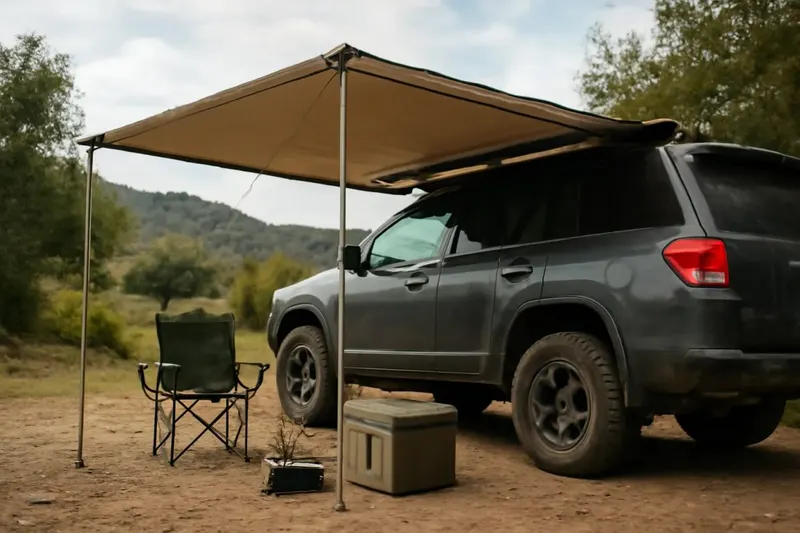
Awning considerations camping start with a simple idea: shade and shelter are only useful if the setup fits how you travel. A compact roof awning can be easy to deploy for quick lunch stops, while a larger wall-mounted option may make more sense for longer basecamp stays. The right choice depends on how often you stop, how many people use the space, and whether your vehicle has room for a bulky folded package.
It also matters how you camp in changing weather. Sun, light rain, and dust are common reasons people want an awning, but each condition puts different demands on the frame and fabric. A shelter that works well on a calm afternoon can feel frustrating if it takes too long to secure, blocks access to doors, or creates an awkward footprint around camp. Thinking through those details early helps you choose gear that supports the trip instead of adding chores.
Vehicle-based camping usually rewards equipment that is quick, repeatable, and easy to store. An awning that folds neatly and stays protected during travel can reduce setup stress when you arrive tired or in fading light. That convenience is most valuable when it does not interfere with roof cargo, ladders, recovery boards, or other gear you need on the outside of the vehicle.
Just as important, an awning should match your tolerance for extra steps. Some people prefer a simple shade panel they can deploy in minutes, while others want side walls, poles, and guy lines for a more enclosed camp space. If you expect frequent stops and short stays, speed may matter more than enclosed coverage. If you build a larger camp and linger longer, added structure can be worth the tradeoff in weight and complexity.
Size, Shape, and Vehicle Space
Size is one of the most practical awning considerations camping because an awning should fit both the vehicle and the camp layout. A wider awning gives more usable shade, but it can overhang into door openings, camp chairs, or cooking space if the site is tight. Measure the mounting area carefully and think about how much clearance you need when the rear hatch, side doors, or tailgate are open.
Shape matters too. Straight-sided awnings can be simple and efficient, while wraparound designs may cover more area but take more planning to place well. The best configuration is the one that works with your usual parking angle and the direction you often face at camp. If you often stop on uneven ground or in narrow clearings, a smaller footprint can be easier to manage than a large canopy that needs perfect placement.
Storage dimensions are easy to overlook. Some awnings are slim enough to live quietly on a roof rack, while others add noticeable height, width, or weight to the vehicle. That affects garage clearance, fuel economy, and roof load planning, especially when you also carry a rooftop tent or cargo box. A clean fit on paper can become awkward if the awning forces you to rearrange the rest of your setup.
Think through the space around the awning when it is open, not just when it is stowed. You want room to move around camp, reach the cooler, and cook without constantly ducking under tie-down points. For families or group trips, a slightly larger awning can improve comfort; for solo travel, a smaller and faster unit may be the better compromise. The goal is not maximum coverage, but the right balance of shelter, access, and ease of use.
Mounting and Vehicle Compatibility
Mounting is where awning considerations camping become mechanical, even if the decision is still mostly practical. An awning needs a secure attachment point that can handle travel vibration, repeated opening, and side load from wind. Roof racks, bed racks, and platform systems each create different mounting opportunities, and each one changes how high the awning sits and how easily it deploys.
Compatibility with the rest of the vehicle is just as important as the bracket itself. A high-mounted awning may clear doors well, but it can be harder to reach without a step or ladder. A lower mount may be easier to use, but it can conflict with windows, bed accessories, or swing-out storage systems. Before buying, check how the awning would interact with antennas, awning rooms, lighting, and any gear that already occupies the same side of the vehicle.
Weight is another key point. A heavy awning adds load high on the vehicle, which can be manageable on some builds and less desirable on others. That does not mean you need the lightest option available, but it does mean the mounting system should be suited to the load and the intended driving you do to reach camp. Rough roads, corrugations, and repeated washboard travel can punish a marginal setup over time.
It helps to think about serviceability too. If the awning needs constant adjustment after a few trips, the system may be more trouble than it is worth. Good mounting should feel simple: tight enough to stay put, but not so complicated that you avoid using the awning. For many travelers, the best choice is the one that installs cleanly, stays aligned, and does not make routine travel harder.
Browse our recommended gear
Our featured picks refresh periodically. While we update them, our editorial guides can help you find the right gear for your rig.
See our guidesFabric, Frame, and Weather Resistance
Material choice has a big effect on how an awning behaves in real camping conditions. Thicker fabric can offer better shade and a more substantial feel, while lighter fabric may pack smaller and deploy more easily. Frame design matters too, because poles, hinges, and hinges with reinforced joints help determine how stable the awning feels once it is open.
Weather resistance is not just about keeping rain off the camp chair. In light rain, the pitch of the awning, the shape of the fabric, and the quality of drainage all influence whether water sheds cleanly or pools in unwanted places. In hot sun, darker materials may feel different than lighter ones, and some coatings or finishes can help reduce glare. The useful question is not whether an awning blocks weather perfectly, but whether it handles the conditions you actually camp in.
Wind is the factor that deserves the most respect. Even a well-made awning can act like a sail if it is left unsupported or opened in a bad orientation. Side walls, legs, and guy lines can add stability, but they also add setup time. If your trips include exposed campsites or changing afternoon wind, a design that is easy to secure is usually a better choice than one that looks impressive but is slow to manage.
Durability should be judged by more than one trip. Zippers, stitching, hinge points, and storage covers all see wear from dust and vibration. It is worth choosing materials that tolerate repeated packing and unpacking without feeling delicate. A dependable awning is one you can trust to survive regular trail use, not just a few calm overnights in perfect conditions.
Setup Timing and Everyday Usability
One of the most useful awning considerations camping is how quickly the shelter can be used after you park. If an awning takes too many steps, it may go unused when you only want a brief break from the sun. Fast deployment matters most during meal stops, roadside pauses, and late arrivals when you are trying to get camp organized before dark.
Usability also includes how the awning behaves once it is open. Can you still reach the fuel door, tailgate, or rear storage? Do guy lines create trip hazards around the kitchen or sleep area? Can one person deploy it alone without awkward lifting or balancing? These details shape whether the awning feels like a real convenience or just another task in the routine.
Think about how often you will move camp. Travelers who relocate every day usually benefit from a simple layout and fewer accessories, because repeated setup and takedown can become tiring. On longer basecamp stays, a more elaborate awning with walls or extra coverage may be worth the extra effort. The best setup is the one that matches your pace of travel rather than asking you to camp in a way that does not fit.
It is also smart to practice at home before a trip. Familiarity with poles, straps, and tension points makes a big difference when you are in wind, dust, or fading light. That rehearsal is not about perfection; it is about learning the sequence so the awning becomes a useful tool instead of a source of frustration. Small improvements in speed and confidence often matter more than adding more features.
Safety, Site Choice, and Maintenance
Safety should guide every awning decision because a shelter is only helpful when it is used with good judgment. Choose a site that gives the awning room to open without brushing branches, rocks, or neighboring vehicles. If conditions are windy, uneven, or uncertain, it may be better to keep the awning closed than to force a setup that will need constant attention.
Site choice also affects comfort. A flat, stable parking spot makes it easier to secure legs and tension points, and it helps prevent the awkward lean that can put extra stress on poles or fabric. Keep cooking heat, open flames, and sharp tools away from the awning edge, and avoid hanging heavy items from parts of the structure that were not meant to carry them. Common sense goes a long way here, especially when camp is busy.
Maintenance is straightforward but important. After a trip, let the fabric dry before long storage if possible, and clear out dust or debris that can work into zippers and seams. Check hardware for loosening, inspect straps and stitching, and look for wear where the awning contacts brackets or rack hardware. Small issues are easier to correct before they turn into a failure on the trail.
Clean habits also help with longevity. Pack the awning carefully so it does not rub against sharp edges or get trapped under overloaded cargo. If you regularly camp in sand, mud, or salty air, more frequent inspection can save trouble later. Good maintenance is not complicated, but it keeps the awning ready for the next trip and preserves the convenience that made it appealing in the first place.