

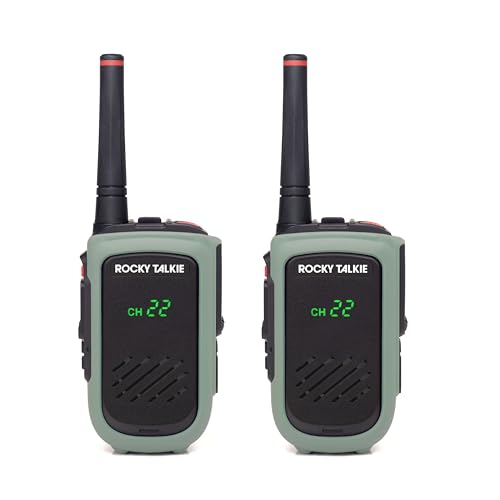


Best GMRS Radios for Off-Road Groups
Best GMRS radio picks for off-road groups: two mobile and two handheld radios by role, with the watts, channels and repeater support each maker states.
Off roading for beginners is mostly about judgment, not gear. This hub covers beginner terrain awareness, spotting principles, route planning, trail etiquette, and Leave No Trace concepts. It's primarily informational; we link to gear only where genuinely relevant.

As an Amazon Associate, Off Road Freedom earns from qualifying purchases. See our affiliate disclosure.
$14.69$7.98
View on Amazon (BAND-AID Brand Travel Ready Portable First Aid Kit, 80 Piece | Emergency Essentials for Minor Wound Care, Bandages, Neosporin & Tylenol, Perfect for Home, Car, Camping, Outdoors & Travel)$390.00$312.00
View on Amazon (Rocky Talkie Expedition 5 Watt Radio - GMRS Radio with IP67 Waterproofing, Long Range Walkie Talkie, NOAA Weather Alerts, 5 Day Battery Life,2 Pack)$199.99$157.99
View on Amazon (Retevis RB48 Plus GMRS Walkie Talkies Long Range for Industrial (4 Pack ) | Heavy Duty Two Way Radios, IP67 Waterproof&Dustproof&Shockproof,Connect Repeater,17-Hr Long Battery Life,SOS, Weather Alert)$13.79$13.10
View on Amazon (JCHL Recovery Tow Strap with Reinforced Loops 2inx20ft Heavy Duty 24,000lb Break Strength Vehicle Recovery Rope Use for Emergency Towing Rope, Tree Saver, Winch Extension, Triple Reinforced Loops)$124.99$103.94
View on Amazon (SurviveX Large First Aid Kit, Emergency Kit for 3-4 People | Labeled Pockets, Zip Stitch Wound Closures, Mountable, Quick Access, For Home, Car, Camping)$89.99
View on Amazon (Midland GXT1000VP4 GMRS Two-Way Radios with Headsets, Black, 2 Pack | 50 Channels, 142 Privacy Codes, Up to 36 Mile Long Range, JIS4 Water Resistant, NOAA Weather Alert, Rechargeable NiMH)$39.90$31.92
View on Amazon (Rhino USA Recovery Tow Strap (3in x 20ft) - 31,518lb Heavy Duty Towing | 31,518lb Break Strength Emergency Tow Strap. Heavy Duty Towing Rope for Truck, UTV, ATV & Jeep Offroad Recovery. Green)$39.99
View on Amazon (Swiss Safe 2-in-1 348 Pcs Large First Aid Kit for Camping, Travel & Car | FSA/HSA Eligible for Survival, Home & Businesses, Bonus Mini Kit for Medical Emergency Aid, Large Hardcase FAK)Prices and availability were accurate when retrieved from Amazon and may change. Retrieved Nov 28, 2026.
It is tempting to treat off-roading as a gear sport, and to buy the next piece of equipment when a trail goes badly. Most of the time the cause is a skill: choosing a line, reading a surface, judging a slope, or knowing when to stop. Skills cost nothing to practise on an easy trail, they carry across every vehicle, and they are what keep you out of the situations where recovery gear matters.
This hub covers the skills in the order a beginner needs them: picking a route, reading the terrain, working with a spotter, travelling in a group, and behaving on the trail. Each has a guide, and the table below shows how they build on each other. When you do need gear, the recovery gear hub and the gear essentials hub take over.
The table sets out a progression from first trip to confident driver. Each row lists what you can do at that stage, the skill to learn next and the guide that covers it. Move up only when the current row feels easy, and drop back when conditions change: a trail you know can be a different trail after rain.

| Stage | What you can do | Skill to learn next | Read this |
|---|---|---|---|
| First trip | Drive an easy, well-used route with others | Choosing a route and checking closures | Choosing beginner-friendly trails |
| Getting comfortable | Handle ruts, loose ground and small obstacles | Reading terrain and picking lines | How to read terrain |
| Working with others | Drive with a spotter and a radio | Hand signals and radio calls | Spotting off-road |
| Group trips | Run in a convoy with agreed order and spacing | Convoy order, spacing and signals | Group trail runs |
| Self-reliant | Recover yourself or a friend with rated gear | Rated recovery points, straps and shackles | Recovery gear hub |
| Always | Leave the trail as you found it | Etiquette and Tread Lightly! principles | Trail etiquette |
A route you can finish is the best teacher. Choose by the trail's rating, the length, the weather and how far you will be from help, and check with the land agency for closures and permits. Our guide, choosing beginner-friendly off-road trails, shows how to read ratings and what to check before you go. Official sources matter here: the Forest Service's motor vehicle use maps, BLM maps and state OHV programs say which routes are open to you.
Have a turnaround plan. A trail that looks fine at the start can get harder, and turning back early is a skill, not a failure.
Ruts, rocks, mud and sand each ask for a different approach. The diagram shows the idea: pick a line on rocks, keep steady momentum in mud, and lower the pressure in sand. How to read terrain covers each surface in turn and what the signs on the ground are telling you.
The same ideas apply to your tires. If you air down, do it off pavement, in small steps, and re-inflate before road speeds; how to air down safely has the steps. If something goes wrong, rated recovery points and rated gear come first, and the recovery strap how-to explains the basics.

A spotter is a second pair of eyes outside the vehicle. The best spotting is boring: one person gives clear signals, the driver trusts them, and everyone agrees what stop means before the engine starts. Spotting off-road: hand signals and radio calls sets out the principles, with example signals in the diagram to agree on with your group, not to treat as a standard.
Radios keep a group together when voices do not carry. GMRS vs CB vs ham compares the options, and our GMRS picks list four radios by role. GMRS requires an FCC licence; FRS does not. Range depends on terrain far more than on the number on the box.
Travelling in a group adds safety and adds rules. Agree an order, spacing and a stop signal, and have someone as tail. Group trail runs: convoy order, spacing and signals covers the order and the signals. Etiquette is the other half: yielding to uphill traffic and non-motorised users, staying on the route, packing out trash and leaving gates as you found them. Off-road trail etiquette sets it out with the Tread Lightly! principles.
Keep a short checklist: a briefing before you go, a head count at each stop and a plan for what to do if someone is stuck or hurt. Practise recovery at a safe place before you need it, and take a first-aid and recovery course if you can.
Good technique is slow, smooth and deliberate. Look well ahead, pick a line before you reach the obstacle, and keep steady throttle rather than stabbing it. Most trail damage comes from speed, and most stuck vehicles come from a hurried line. Let the tires and suspension do the work, and use low range or a low gear for control on steep or technical sections, as your owner's manual describes.
Know your vehicle's angles. Approach, departure and breakover angles decide what you can climb over without scraping, and ground clearance matters in ruts. Walk an obstacle if you are unsure, and decide whether to take it, skip it or take a different line. A decision not to drive something is a skill.
For the surfaces themselves, how to read terrain explains what ruts, rocks, mud and sand each ask of you.
Most trail problems get worse if you rush. If the vehicle stops making progress, stop. Get out, look at the wheels, the ground and what is touching the vehicle, and decide what the problem actually is. A wheel spinning in soft ground needs traction or less pressure. A wheel hanging in the air needs weight shifted or the line changed. A vehicle resting on its frame needs digging or lifting.
Agree a plan with the group before anyone pulls or winches. Keep people clear of lines and out from under vehicles, and keep one person in charge. If you need to recover, use rated gear on rated points, as explained in the recovery gear hub, and use a damper where the maker says to. If the plan needs gear or skills you do not have, call for help.
Afterwards, talk it over. What caused it, what worked and what would you do differently? That conversation is where skill grows, and it is much cheaper than another recovery.
Conditions change trails more than any other factor. Rain turns easy dirt to slick mud, snow hides hazards, and heat strains cooling systems and people. Check the forecast for the area, not just the trailhead, and ask local sources about recent conditions. Be ready to turn back, because weather can close a route after you enter it.
Water crossings need extra care. Depth, current and the bottom are often not visible, and water can damage an engine or sweep a vehicle away. Walk a crossing when it is safe to do so, check the owner's manual for any fording limits for your vehicle, and avoid moving water if you cannot judge it. We give no depth figures, because the limits belong to your vehicle and the conditions.
Seasonal travel adds its own needs. In cold weather carry more layers, a way to melt snow or keep water liquid and a plan for cold starts. In heat, carry more water and watch the temperature gauge. Check land agency alerts for fire restrictions, closures and seasonal rules, and follow them. See choosing beginner-friendly off-road trails for how to check conditions before you go.
Five pieces for practising skills rather than showing off gear: radios for the lead and the spotter, a rated strap and a jack to learn properly, and a plug kit to practise at home. Figures are the ones the makers print.
A radio for the lead vehicle
A mobile radio that hides the radio unit and keeps the dash clear.
Midland product page, checked 2026-11-12
A handheld for the spotter
A programmable handheld that charges from a USB-C cable.
BTECH product page, checked 2026-11-12
Practice with a rated strap
A stretch strap in the maker's lightest weight class.
ARB product page, checked 2026-11-12
Learn the jack before you need it
A tall jack for lifting a wheel clear on the trail.
Hi-Lift product page, checked 2026-11-12
Practice a plug at home
A plug kit with a lot of repair material and a case that stays with the vehicle.
Safety Seal product page, checked 2026-11-12
Amazon buttons are affiliate links: we may earn from qualifying purchases. We chose these from maker pages; we have not tested them. See how we choose.
Plan tire pressure before you go.
Every guide in this category, from checklists to how-tos and picks pages.
Best GMRS radio picks for off-road groups: two mobile and two handheld radios by role, with the watts, channels and repeater support each maker states.
Beginner off road trails: how to judge difficulty ratings, read trail reports and maps, check closures, and choose a route that fits your vehicle.
Off road convoy etiquette covers lead and sweep roles, spacing, dust, radio calls and hand signals so a group trail run stays together and safe.
How to read terrain off road: spot ruts, rocks, mud and sand early, judge line choice and traction, and know when to stop and walk the trail first.
Off road trail etiquette: who has right of way, how to stay on the trail, pack out trash and follow Tread Lightly principles on shared land.
Off road spotting hand signals and radio calls: how a spotter guides a driver, which signals to agree on first, and how to stay out of danger zones.


Current Amazon results
Read what is included and check each item's stated rating.
See options on Amazon
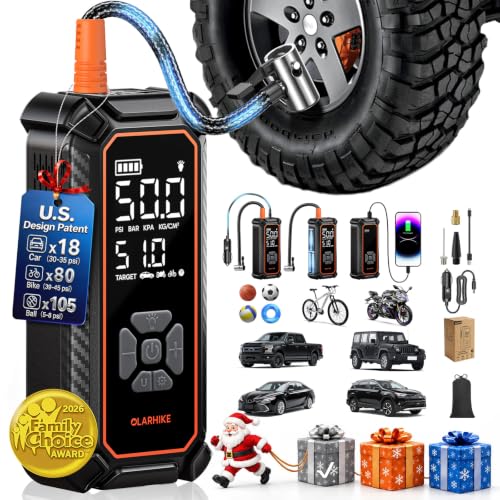


Current Amazon results
Match the connector and flow to your tires; check the duty cycle before you rely on it.
See options on Amazon

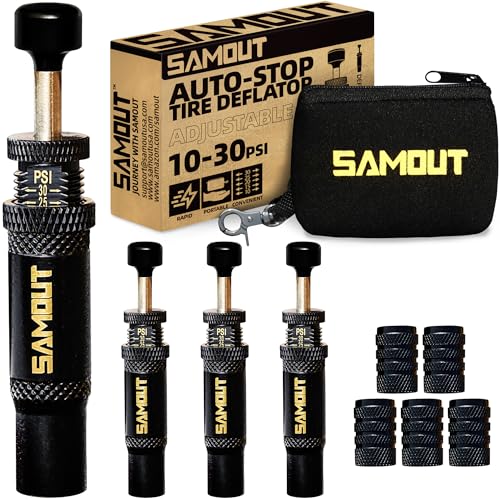

Current Amazon results
Match the connector and flow to your tires; check the duty cycle before you rely on it.
See options on Amazon



Current Amazon results
Check voltage, wiring needs and local rules on aux lighting before you buy.
See options on AmazonStart with an easy route and an experienced friend or a course. Learn one skill at a time and repeat it. Gear helps, but practice and judgment matter more.
Check the rating and recent conditions, ask local groups, and turn back if the first obstacle feels beyond you. Weather and recent rain can change a trail's difficulty.
On technical sections, yes. A spotter sees what the driver cannot. Agree the signals first, and agree that anyone can call stop.
GMRS needs an FCC licence; FRS does not. CB does not need an individual FCC licence. Check the FCC page before you transmit.
Usually uphill traffic, and non-motorised users. Local rules vary, so follow signs and the land agency's guidance, and yield when in doubt.
Your route, who is with you, your vehicle and the time you expect to be back. Include a time to call for help if you have not checked in.
Last checked 2026-11-12. Each link was opened and read on that date.
This guide reflects independent editorial research, not first-hand product testing, professional mechanical training, or rescue certification. Some links on this page are Amazon Associates affiliate links; see our affiliate disclosure.


